Reading time: 16 min
Updated: July 2025
Level: Beginner-Friendly
AI Image Generator Company Profile

Midjourney

Turn Your Words Into Stunning Art — Instantly

Midjourney is the AI image generator that changed how the world creates art. Type a description of what you want to see — a dragon flying over a futuristic city, a watercolour portrait of a cat, an alien landscape at sunset — and Midjourney creates it in seconds. Used by millions of artists, designers, and creators worldwide.

2022Founded
0M+Users
0+Model Versions
Self-FundedStatus
About Midjourney

What Is Midjourney?

Imagine you want a beautiful painting of a sunset over a Japanese castle, surrounded by cherry blossom trees — but you cannot draw or paint. In the past, you would need to hire a professional artist, wait days or weeks, and pay hundreds or thousands of pounds. With Midjourney, you simply type: "Japanese castle at sunset, cherry blossoms, watercolour painting style" — and within seconds, you have four stunning, professional-quality images to choose from. This is what Midjourney does, and it is why millions of people around the world use it every day.

Midjourney is an AI image generation tool — a computer programme that uses artificial intelligence to create images based on text descriptions. It was created in 2022 by a small independent research company in San Francisco, California, and has grown into one of the world's most popular and celebrated AI creative tools. Artists, graphic designers, marketing teams, game designers, book cover illustrators, architects, filmmakers, students, and hobbyists all use Midjourney to bring their visual ideas to life without needing drawing or painting skills.

What Makes It Special: Midjourney is not just any image generator — it is known for producing images with a distinct, painterly, artistic quality that other AI tools often cannot match. Its images tend to look genuinely beautiful and aesthetically considered, rather than merely technically correct. This artistic sensibility — built into its AI model — is what makes Midjourney the favourite tool of serious creative professionals who need results that are not just accurate but genuinely compelling.

What is particularly remarkable about Midjourney is how it was built and funded. Unlike most major AI companies, Midjourney did not raise hundreds of millions of dollars from venture capital investors. It is a small, independent, self-funded company — one that became profitable almost immediately after launch and has operated without external investment ever since. This financial independence gives Midjourney unusual freedom to pursue the research and products it believes in, without pressure from investors to maximise short-term growth at the expense of quality or values.

Midjourney was originally accessed through Discord — a popular online communication platform used by gaming and creative communities. Users join Midjourney's Discord server, type commands with their image descriptions, and receive AI-generated images within seconds. This community-based approach meant that users could see each other's creations, share prompts (the text descriptions used to create images), and learn from each other — creating one of the most vibrant creative communities in the history of the internet. More recently, Midjourney has also launched a dedicated web interface at midjourney.com, making it more accessible to users who prefer not to use Discord.

The company releases regular updates to its AI model — each new version producing higher quality, more accurate, and more detailed images than the last. By 2024, Midjourney's models had reached a level of quality where images produced by the tool were regularly being mistaken for professional photographs or painted by human artists — and winning photography and digital art competitions.

At a Glance

Midjourney — Quick Facts

Essential information about Midjourney in one clear overview.

Founded
2022
Founder
David Holz
Headquarters
San Francisco, CA, USA
AI Category
Text-to-Image / Generative AI
Company Type
Independent — Self-Funded
Official Website
Original Platform
Discord (community-first launch)
The Creator

Founder — David Holz

David Holz

Founder & CEO, Midjourney

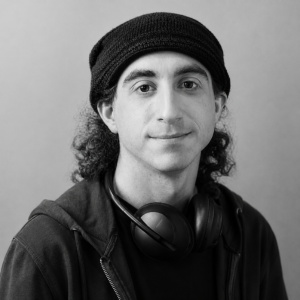
David Holz is the founder and CEO of Midjourney — a researcher, entrepreneur, and visionary who built one of the world's most celebrated AI creative tools with a small, focused team and no external investment. His journey to creating Midjourney is shaped by a deep interest in the intersection of technology, human creativity, and imagination.

Before Midjourney, David co-founded Leap Motion — a pioneering hand and gesture recognition technology company that created hardware allowing people to control computers with natural hand movements. Leap Motion's technology was genuinely innovative and attracted significant investment and industry interest. The experience gave David deep expertise in the challenges of building human-computer interaction technology and the patience and persistence required to take frontier technology from research to commercial reality.

David's motivation for creating Midjourney came from a conviction that AI could dramatically expand human creativity — not by replacing artists, but by giving everyone access to a creative medium that previously required years of training to use. He wanted to build a tool that would allow people to externalise the images in their imagination quickly and beautifully, regardless of whether they could draw. His vision was less about productivity and more about expanding human experience and imagination — which is reflected in the distinct aesthetic sensibility and community focus that makes Midjourney different from purely productivity-oriented AI tools.

Previous CompanyCo-Founder of Leap Motion (gesture tech)
PhilosophyAI should expand human imagination, not replace artists
FundingSelf-funded — profitable from early on
TeamSmall independent team in San Francisco
History

Midjourney's Journey

From an ambitious idea to one of the world's most-loved AI creative tools.

2021
Research Begins
David Holz and a small team of researchers begin building Midjourney — working on the AI model and the technical infrastructure needed to generate high-quality images from text. The project starts with a core conviction: AI can create genuinely beautiful art, not just technically accurate pictures.
March 2022
Open Beta Launches on Discord
Midjourney opens its beta to the public via Discord — an unusual, community-first launch strategy. Users join the Midjourney Discord server and begin generating images using text commands. The response is immediate and enthusiastic: millions of people discover they can create stunning artwork with just words. The Discord community grows extraordinarily rapidly.
Mid 2022
Rapid Growth & Paid Tiers
Demand for Midjourney grows so rapidly that the company introduces paid subscription tiers — and almost immediately becomes profitable without external investment. This extraordinary achievement — a small AI company becoming self-sustaining within months of launch — allows Midjourney to remain independent and focused on quality rather than investor-driven growth.
2022–2023
Versions 3, 4 & 5 — Quality Leaps
Midjourney releases successive model versions — V3, V4, and V5 — each representing a dramatic improvement in image quality, detail, and the ability to follow complex text prompts accurately. By V5, Midjourney images regularly achieve photorealistic quality that is difficult to distinguish from real photographs, drawing international attention and sparking significant debate about AI art.
2023
Art Competition Controversy
A Midjourney-generated image wins first place in a fine arts competition at the Colorado State Fair, sparking global debate about AI art, creativity, and what it means to be an artist. The controversy raises important questions about the future of art that are still being debated — and dramatically increases public awareness of Midjourney's capabilities.
2024
Web Interface & V6
Midjourney launches a web-based interface at midjourney.com, making the tool more accessible beyond Discord. V6 brings dramatically improved prompt understanding, more natural and detailed images, and advanced text rendering in images — a capability that had previously been a weakness of AI image generators. Midjourney continues to expand its user base and capability set with each release.
Features

Midjourney's Products & Features

Everything Midjourney can do — explained simply for beginners.

Text-to-Image Generation

The core feature: type a description of any image you can imagine, and Midjourney creates it. The description can be as simple or as detailed as you like. "A peaceful mountain lake at dawn" creates a beautiful landscape. "A photorealistic portrait of a wise old wizard with a silver beard, holding a glowing staff, in the style of a fantasy oil painting" creates something dramatically more specific. The AI interprets your words and creates four image options for you to choose from.

Image Variations

When Midjourney creates your images, you can ask for variations of any one you like — subtly different versions of the same image that explore different compositions, lighting choices, or details. This allows you to iterate rapidly, finding the exact image you had in mind through a series of refinements rather than trying to get a perfect result from a single prompt.

Upscaling

Midjourney generates images at a standard resolution — good for viewing on screen. Upscaling increases the resolution and detail of your chosen image, making it large enough for printing, professional use, or fine detail work. The upscaling process also typically enhances details, sharpening textures and adding fine features that create a more polished, professional final image.

Artistic Styles

Midjourney can create images in virtually any artistic style you describe — oil painting, watercolour, pencil sketch, digital illustration, photography, concept art, anime, impressionism, art deco, surrealism, and thousands more. You can also reference specific artistic eras, genres, or describe the aesthetic you want in natural language. This style flexibility makes Midjourney useful across a huge range of creative projects.

Advanced Controls

Experienced users can use Midjourney's parameter system to fine-tune their results — controlling the aspect ratio of the image (square, landscape, portrait, cinema widescreen), the "chaos" level (how varied and unexpected the results are), the "stylize" setting (how strongly the AI applies its own aesthetic sensibility versus following your prompt literally), and many other adjustable parameters that give creative control to advanced users.

Discord Community

Midjourney's original home — a thriving Discord community of millions of creators sharing their work, experimenting with prompts, and helping each other get better results. The community is one of the most active and creative AI communities anywhere on the internet. Seeing thousands of beautiful images created by other users every day is both inspiring and educational, helping new users quickly learn what kinds of prompts produce the best results.

Web Interface

Launched to complement the Discord experience, midjourney.com provides a dedicated web-based interface for creating and managing your Midjourney images. The web interface makes it easier to organise your image history, explore and save images, and use the tool without needing to navigate Discord's more complex interface. For new users, the web interface is typically the recommended starting point.

Image Reference

You can upload your own images and use them as a reference for Midjourney's generation — asking it to create something "in the style of" your uploaded image, to combine elements from your photo with new AI-generated content, or to reimagine a subject from your photo in a completely different artistic style. This image-to-image capability significantly expands what you can do with Midjourney beyond pure text description.

Process

How Midjourney Works

From typing a description to holding your finished artwork — here is each step explained simply.

1
Text Prompt
You type a description of the image you want to create — your "prompt." This can be simple or detailed: "a cat on a rooftop at night" or "a hyper-detailed watercolour painting of a calico cat sitting on a Paris rooftop at midnight, city lights reflected in her eyes, soft moonlight, 8K resolution." The more specific and descriptive your prompt, the more precisely Midjourney can match your vision.
2
AI Understanding
Midjourney's language model reads and analyses your text — understanding the main subject (what the image is about), the style you want (painting, photo, illustration, etc.), the mood and atmosphere (peaceful, dramatic, whimsical), the lighting and colour palette you describe, and any other details in your prompt. The AI builds an internal representation of the image you are requesting before beginning to generate it.
3
AI Processing
Midjourney uses a technique called diffusion to generate the image. It starts with random visual noise — essentially a completely random pattern of pixels — and then gradually transforms this noise into a recognisable image that matches your description. Each step in the diffusion process refines the image further — shapes emerge, details sharpen, colours organise — until a coherent, high-quality image materialises from the initial noise. This process takes seconds for Midjourney's powerful computers to complete.
4
Four Options Generated
Midjourney always creates four image options from your single prompt — showing you different interpretations of your description rather than committing to just one. These four options might differ in composition (how the subjects are arranged), lighting, colour palette, or specific stylistic choices. Having four options lets you see the range of possibilities and choose the direction you prefer, then refine further from there.
5
Upscaling
Once you have chosen your favourite of the four images, you can upscale it — increasing the image's size and resolution, and adding additional detail and sharpness. The upscaled version is much larger and more detailed than the initial generation, making it suitable for printing, professional use, or sharing at high quality. Upscaling is the step that transforms a good preview image into a final, high-quality artwork ready for its intended use.
6
Your Final Artwork
The finished, upscaled image is delivered to you — ready to download and use. The whole process from typing your prompt to downloading your finished image typically takes under two minutes, even for very detailed, high-resolution images. You can then use your image for any personal or commercial purpose (depending on your subscription tier), share it with the community, or use it as the starting point for further refinement.
Who Uses It

How Different People Use Midjourney

Midjourney is used across creative and business contexts — here is how different groups benefit from it.

Graphic Designers

Designers use Midjourney to rapidly generate concept images for client presentations, explore visual directions for new projects, create custom illustrations for websites and marketing materials, and produce unique visual assets that would be expensive or time-consuming to commission from human illustrators. Many designers use Midjourney for the exploration phase of projects, using AI-generated images to show clients options before committing to a specific direction.

Digital Artists

Artists use Midjourney as a creative partner — using it to generate initial compositions they then paint over, to explore visual ideas quickly, to experiment with styles they have not mastered, or as a tool for creating finished digital artworks that blend their own creative direction with AI execution. Many artists describe Midjourney as one of the most significant creative tools they have ever encountered.

Marketing Teams

Marketing departments use Midjourney to create unique, eye-catching visual content for social media, advertisements, campaigns, and presentations — without needing to commission expensive photography or illustration. The speed and variety of Midjourney allows marketing teams to create multiple visual directions for A/B testing, seasonal campaigns, and creative explorations at a fraction of the traditional cost.

Authors & Content Creators

Writers use Midjourney to create book covers, visualise characters and settings from their stories, and generate imagery for their blogs, YouTube thumbnails, and social media content. For self-publishing authors in particular, Midjourney has dramatically reduced the cost and effort of producing professional-quality book cover artwork.

Game Designers

Game developers and designers use Midjourney for concept art — quickly visualising characters, environments, items, and UI elements at the design stage before committing significant development resources. The speed of Midjourney allows game teams to explore many more visual directions than would be practical with traditional concept art commissions.

Architects & Designers

Architects use Midjourney to create photorealistic architectural visualisations and mood boards — showing clients what their proposed buildings might look like in specific environments and lighting conditions. Interior designers use it to visualise room layouts and aesthetic directions before committing to furniture purchases or renovation decisions.

Why People Choose Midjourney

Key Advantages

Exceptional Image Quality
Midjourney consistently produces some of the highest-quality AI images available — known for beautiful lighting, realistic textures, coherent compositions, and a painterly, artistic quality that many users feel surpasses other AI image generators for purely aesthetic results.
Rapid Generation
From typing your prompt to seeing four image options takes typically under 60 seconds — even for highly detailed, complex images. This speed makes rapid creative iteration practical in a way that traditional art or photography commissioning never could be.
Incredible Style Range
Midjourney can create images in virtually any artistic style — from photorealistic to painterly, from classical oil painting to modern digital illustration, from anime to architectural visualization. This versatility makes it suitable for an enormous range of creative and professional applications.
Vibrant Community
The Midjourney Discord community is one of the most active, creative, and helpful AI communities in the world — full of creators sharing prompts, techniques, and inspiration. Learning from millions of other users' shared creations dramatically accelerates your own learning and creative development.
Continuous Improvement
Midjourney releases regular model updates, each significantly improving quality and capabilities. The tool you use today is dramatically better than the one released a year ago, and future versions promise even greater capabilities. The improvement cadence is one of the fastest in the AI industry.
Accessible to Non-Artists
Midjourney requires no drawing ability, no design training, and no technical knowledge — just the ability to describe what you want in words. This democratisation of visual creation has opened creative possibilities to millions of people who previously had no way to realise their visual ideas.
Honest Assessment

Challenges & Considerations

Copyright Questions
Midjourney's AI was trained on large amounts of images from the internet, including copyrighted artwork. Some artists have raised concerns about AI systems learning from their work without permission or compensation. This is an active legal and ethical debate across the AI image generation industry that is still being resolved in courts and through evolving legislation.
AI Ethics
AI image generation raises questions about the impact on professional artists and illustrators whose work may be replicated by AI, the use of AI for creating deepfakes or misleading content, and the broader implications of making powerful creative tools available without restrictions. Midjourney has implemented some content filters and guidelines but navigating these questions is ongoing.
Competition
Midjourney faces competition from Adobe Firefly (integrated with Adobe's creative tools), DALL·E (from OpenAI), Stable Diffusion (open-source), and a growing number of specialised image generators. Maintaining its quality lead and community advantage as competitors improve is an ongoing challenge.
Computing Costs
Generating high-quality images requires significant computing power — expensive GPU servers running continuously. As Midjourney grows its user base, managing these infrastructure costs while maintaining quality and competitive pricing is a significant operational challenge, particularly for an independent company without external investment.
Market Landscape

Midjourney vs. Competitors

ToolCompanyImage QualityEase of UseCostBest ForKey Strength
MidjourneyMidjourney Inc.✓ Best aestheticMedium (Discord/Web)SubscriptionArtistic, premium imagesMost beautiful results, strong community
DALL·E 3OpenAIVery goodVery easy (ChatGPT)ChatGPT PlusConcept images, accuracyFollows instructions very precisely
Stable DiffusionStability AIGood (model-dependent)TechnicalFree (self-hosted)Developers, customisationOpen source, fully customisable
Adobe FireflyAdobeVery goodVery easyAdobe CC planCommercial work, design teamsCommercial safe, Adobe integration
Did You Know?

10 Fascinating Facts About Midjourney

Fact 01
Midjourney is believed to have fewer than 50 employees — yet it serves millions of users worldwide and became profitable almost immediately after launching. This makes it one of the most revenue-efficient AI companies in the world, generating extraordinary value per employee compared to much larger organisations.
Fact 02
In 2022, an image created using Midjourney (and entered by Jason Allen) won first place in the digital art category at the Colorado State Fair's art competition. This ignited global debate about AI art — some called it revolutionary, others called it cheating — and brought Midjourney to the attention of millions who had never heard of AI art generation.
Fact 03
Midjourney has never taken outside investment from venture capital firms — it is entirely self-funded from its own subscription revenue. This extraordinary financial independence is rare for a technology company at Midjourney's scale and gives David Holz complete control over the company's direction without pressure from investors.
Fact 04
Midjourney's Discord server became one of the largest servers on Discord shortly after launch — with millions of members sharing AI-generated artwork, prompts, and techniques. The scale of this creative community — all assembled around a single AI tool — is historically unprecedented and remains one of Midjourney's unique competitive advantages.
Fact 05
By Midjourney V5, the quality of images was so high that independent studies found a significant percentage of people could not reliably distinguish Midjourney-generated images from real professional photographs — a threshold of quality previously considered years away from AI generation tools.
Fact 06
Midjourney generates billions of images per year — an astonishing scale of creative output. The company's servers are continuously processing image requests from users around the world, 24 hours a day, seven days a week, representing one of the largest concentrations of creative AI computation on Earth.
Fact 07
Before founding Midjourney, David Holz co-founded Leap Motion — a company that created technology allowing computers to be controlled by hand gestures. Both companies share a common theme: giving people new ways to interact with computers using natural human abilities (gesture, language) rather than traditional technical interfaces.
Fact 08
Midjourney works in multiple languages — users from around the world can describe their desired images in their own language and Midjourney will understand and generate appropriate results. This multilingual capability has helped Midjourney build a truly global community of creators, particularly strong in communities across Asia, Europe, and Latin America.
Fact 09
The Midjourney documentation and community guides for writing effective prompts have themselves become a kind of art — detailed resources teaching users how to describe their visions in ways that the AI will interpret correctly. "Prompt engineering" for Midjourney has become a skill that dedicated users study seriously and share extensively.
Fact 10
The time between Midjourney model versions has been getting shorter even as each release delivers increasingly dramatic improvements. The company's research team continuously publishes improvements, meaning the tool Midjourney users access today will be significantly more capable within months — making it one of the fastest-improving creative AI tools available.
Common Questions

Frequently Asked Questions

Midjourney is an AI image generator that creates images from text descriptions. You type a description of what you want to see — called a "prompt" — and Midjourney uses artificial intelligence to create four image options based on your description within seconds. For example, you might type "a sunset over a calm ocean, painted in the style of Claude Monet, warm golden colours" and receive four beautiful impressionist sunset paintings. You can then choose your favourite, ask for variations, and upscale the image for high-resolution use. Midjourney uses a technique called diffusion modelling — starting from random visual noise and gradually refining it into a coherent image that matches your text description. It is available as a Discord bot (through the Midjourney Discord server) and through a web interface at midjourney.com.

Midjourney was originally free to try (with a limited number of free image generations) but has since moved to a paid subscription model. Users must subscribe to a paid plan to use Midjourney — plans are available at different price tiers depending on usage needs (the number of images you can generate per month and whether you need commercial usage rights). There is no free tier currently, though pricing is competitive with other professional creative software subscriptions. For regular users, the subscription pays for itself very quickly when compared to the cost of commissioning equivalent images from human artists or stock photography services.

Commercial usage rights for Midjourney images depend on your subscription tier. Paid subscribers have commercial usage rights for the images they generate — meaning they can use those images in products, marketing, merchandise, publications, and other commercial contexts without additional licensing fees. However, there are important limitations to understand: Midjourney's terms of service and the specific licence vary by plan, so it is important to read the current terms carefully if you plan to use generated images for commercial purposes. Note that copyright for AI-generated images remains a complex and evolving legal area in many jurisdictions.

No — Midjourney requires no drawing ability, no design training, and no technical knowledge. The only skill needed is the ability to describe what you want in words. You type a description of the image you want, and Midjourney creates it. That said, learning to write effective prompts — detailed, specific descriptions that guide the AI toward exactly the result you want — is a learnable skill that improves with practice. The Midjourney community has extensive resources for learning how to write better prompts, and the wide variety of images shared publicly by other users is itself a great learning resource showing what kinds of prompts produce different types of results.

Midjourney, DALL·E, Stable Diffusion, and Adobe Firefly all create images from text descriptions, but they differ in important ways. Midjourney is generally considered the best for aesthetic quality — its images tend to have a beautiful, painterly, artistic quality that many users find superior for creative and artistic work. DALL·E (from OpenAI) is excellent at following precise instructions very accurately, making it good when you need a specific, literal interpretation of your description. Stable Diffusion is open-source and free, making it ideal for technically minded users who want to run it on their own hardware and customise it extensively. Adobe Firefly integrates directly with Adobe's creative tools and produces commercially safe images (because it was trained only on licensed content), making it the best choice for professional design work where copyright certainty is important. Most serious creators end up using multiple tools for different purposes — choosing the one best suited to each specific project.

A "prompt" in Midjourney is the text description you type to tell the AI what image you want it to create. It can be as simple as a few words or as detailed as several sentences. Simple prompt: "a red rose on a white background." Detailed prompt: "a single deep red rose with dew drops on its petals, placed on a white marble surface, dramatic side lighting from the left, macro photography style, shallow depth of field, sharp detail." The more specific and descriptive your prompt, the more precisely Midjourney can match your vision. Effective prompt writing includes describing the subject, the style you want, the mood or atmosphere, the lighting, the colour palette, and any relevant artistic reference points. Learning to write effective prompts is one of the most valuable skills for getting the best results from Midjourney.

Midjourney offers several subscription tiers, typically ranging from a basic plan for casual users to professional plans for heavy users and teams. The best plan for you depends on how many images you plan to generate and whether you need commercial usage rights. For occasional personal use, the basic plan is usually sufficient. For professional or commercial use — creating content for clients, products, or marketing — a higher tier that includes commercial rights and more generation capacity is recommended. Plans include options for "fast" generations (immediate processing) and "relax" generations (processed during quieter periods, slower but cheaper). For most people getting started, the basic paid plan is a good starting point — you can always upgrade as your usage grows.

Midjourney has restrictions on generating images of real, named public figures — you cannot generate realistic images of specific celebrities, politicians, or other named individuals in most contexts. These restrictions are designed to prevent the creation of misleading or potentially harmful images of real people. You can generate images of fictional people, generic human subjects (like "a portrait of a middle-aged woman with kind eyes"), or clearly stylised depictions. The specific content restrictions evolve over time, and Midjourney's community guidelines provide the definitive current rules about what is and is not permitted. This is one of the content safety measures Midjourney has implemented to prevent misuse of the technology.

Midjourney images are created by AI based on human direction — a collaboration between human creative intent and AI execution. The human provides the creative idea, direction, and curation (choosing which of the generated options to develop further), while the AI provides the technical execution of translating that idea into a visual image. Whether this constitutes "human art" or "AI art" is a matter of ongoing philosophical and legal debate. Some argue that the human creative direction is sufficient to consider the result human art; others argue that the execution being AI-generated is the defining factor. Most thoughtful observers consider it a new category — AI-assisted art — that is different from both traditional human art and from fully automated image generation without human direction.

The Midjourney Discord is one of the largest and most active creative communities on the internet — with millions of members from around the world sharing their AI-generated artwork, prompts, and techniques. It is a genuinely collaborative and inspiring environment where you can see thousands of stunning images created by other users in real time, discover effective prompt techniques by seeing what others have used, ask questions and get help from experienced users, and participate in challenges and themed creation events. The community is international and inclusive, with channels for different languages, different artistic styles, and different levels of experience. For new Midjourney users, the Discord community is one of the best resources for learning quickly what prompts produce good results and discovering the range of what the tool can create.

Each major version of Midjourney has represented a dramatic step forward in capability. Version 1 (early 2022) produced recognisable but often blurry, imprecise images that showed promise but had obvious limitations. Version 2 improved significantly on consistency and detail. Version 3 introduced a more distinctive aesthetic and better handling of complex prompts. Version 4 was a major leap — producing images of significantly higher quality with better coherence and detail. Version 5 reached near-photorealistic quality for many types of images, with dramatically better human anatomy (a historic challenge for AI), lighting, and texture. Version 6 (latest major release) brought improved text rendering in images (the ability to include legible text in your generated images), better prompt adherence (following complex instructions more accurately), and further quality improvements across all image types. The progression from V1 to V6 in roughly two years represents one of the fastest quality improvement curves ever seen in creative technology.

David Holz and the Midjourney team have shared several directions for the company's future. These include video generation (creating short video clips from text descriptions, not just still images), a more powerful web interface that provides richer editing and organisation tools, better personalisation (AI models that learn your aesthetic preferences over time and produce results more aligned with your style), improved consistency (the ability to create multiple images with consistent characters, ensuring the same character looks the same across different scenes), and continued model improvements that will make V7 and beyond dramatically more capable than current versions. Midjourney has also discussed ambitions for hardware — creating physical products in addition to software — though this is a longer-term vision. The team is particularly focused on deepening the tool's ability to understand complex, nuanced creative direction, moving closer to a tool that can truly realise complex creative visions with minimal prompt engineering.

Final Thoughts

Conclusion

Midjourney has done something genuinely extraordinary: it has made the ability to create beautiful, professional-quality visual art accessible to anyone with a imagination and the words to describe it. For thousands of years, creating visual art required either years of training in traditional skills or significant budget to commission professional artists. Midjourney changed this — permanently and profoundly. Today, a student, a small business owner, an author, or a hobbyist can produce imagery that rivals professional studios, in seconds, for the cost of a monthly subscription comparable to a streaming service.

What makes Midjourney particularly special among the many AI image generators now available is its commitment to aesthetic quality and its community-first philosophy. From the very beginning, David Holz's goal was not to produce the most technically accurate image generator but to create a tool that produces genuinely beautiful images — ones with the artistic sensibility and aesthetic consideration that make visual art moving and compelling rather than merely correct. This commitment to beauty over pure accuracy has given Midjourney a distinctive quality that its users immediately recognise and that competitors have found very difficult to replicate.

Midjourney's bet — that AI creative tools should produce beauty, not just accuracy — turned out to be exactly right. The world wanted an AI that could make genuinely stunning art, and Midjourney built it.

— Summary of Midjourney's core design philosophy

The debates that Midjourney's success has sparked — about AI art, copyright, creativity, and what it means to be an artist — are important ones that society is still working through. These questions do not have easy answers, and reasonable people disagree strongly about them. But whatever conclusions emerge from these debates, the creative possibilities that Midjourney has opened up are real and significant. Designers produce better concepts faster. Authors visualise their stories. Marketers create unique campaign imagery. Students explore visual creativity with tools previously unavailable to them. These benefits are tangible and meaningful regardless of where the broader debates about AI art eventually settle.

Looking ahead, the future of Midjourney — and AI image generation more broadly — points toward even greater capability: video generation, more precise control over image content, better consistency across multiple generated images, and increasingly sophisticated understanding of complex creative direction. As each model version surpasses the last, the distance between what you can imagine and what you can create continues to shrink. Midjourney, as the tool that started this creative revolution for millions of people, is uniquely positioned to continue leading it.

Whether you are a professional designer, a passionate hobbyist, a curious student, or someone who has always wished they could draw — Midjourney is one of the most remarkable creative tools ever built, and exploring what you can create with it is one of the more delightful experiences the current era of AI has to offer.

Start Creating with Midjourney

Join millions of creators and see what you can imagine — and build.