
Reading time: 26 min
Updated: July 2025
Level: Beginner-Friendly
AI Image Company Profile

Stability AI

The Company Behind Open-Source AI Image Generation

Stability AI created Stable Diffusion — the world's most popular open-source AI image generator, used by millions of artists, developers, and businesses to turn text descriptions into stunning artwork in seconds. Founded in 2019 and reaching a $1 billion unicorn valuation in 2022, it is one of the most influential companies in the history of generative AI.

0B+Peak Valuation
0M+Revenue 2024
2019Year Founded
0M+Model Downloads
About Stability AI

What Is Stability AI?

Have you ever looked at a painting and thought, "I wish I could create something like this, but I don't know how to draw"? Or imagined a beautiful scene in your mind — a purple sunset over a futuristic city, a dog wearing astronaut gear on the moon — and wished you could bring it to life visually? Before AI image generation existed, you would have needed years of art training or thousands of dollars paid to a professional illustrator. Stability AI changed all of that.

Stability AI is a British-American artificial intelligence company founded in 2019 and best known for creating Stable Diffusion — a revolutionary AI system that can turn any written text description into a detailed, beautiful image in seconds. Type "a painting of a medieval knight riding a golden dragon over a snowcapped mountain," and within moments, the AI produces a stunning image matching exactly that description. No drawing skill needed. No expensive software. Just words and imagination.

Simple Analogy: Think of Stability AI as a magic paintbrush you control with words. Instead of learning to paint for years, you simply describe what you want and the AI creates it instantly — like having a professional artist on call 24 hours a day who works at the speed of thought.

What makes Stability AI truly different from other AI image companies is its commitment to open-source technology. When most AI companies keep their best models secret and charge high fees for access, Stability AI released Stable Diffusion's code and model weights freely to the public — allowing anyone in the world to download, use, study, and build on it without paying a licence fee. This was a revolutionary decision that democratised AI image generation at a global scale.

The result was an explosion of creativity and innovation. Within months of Stable Diffusion's public release in August 2022, millions of people worldwide were running the model on their own computers, building applications on top of it, creating art, designing game characters, generating marketing materials, and exploring the boundaries of what AI could create. A vast open-source ecosystem grew around Stable Diffusion — custom trained models (called "checkpoints" and "LoRAs"), user interfaces like Automatic1111 and ComfyUI, community websites, and thousands of tutorials — all created by passionate contributors who built on Stability AI's open foundation.

The company was co-founded by Emad Mostaque, a British-Bangladeshi entrepreneur and former hedge fund manager who had an unusual path into AI leadership. Emad was driven by a bold vision: that AI technology, especially AI that could understand and generate creative content, should be accessible to everyone — not locked up in the servers of a few big corporations. His decision to release Stable Diffusion as open source was controversial but proved enormously influential, establishing Stability AI as a champion of open, democratised AI development.

Beyond images, Stability AI has expanded its technology to cover video generation, audio creation, text-based language models, code generation, and other creative AI domains — building a broad platform of open-source generative AI tools under the "Stable" brand. The company has faced significant financial and leadership challenges, but its core technology — Stable Diffusion — remains one of the most widely used and culturally significant AI systems ever created, having generated billions of images and permanently changed how humans interact with visual creativity.

Why It Matters: Stable Diffusion was downloaded and used by more people in its first year than almost any other AI model in history. It sparked a global creative revolution, showed that open-source AI could compete with or surpass closed commercial systems, and gave millions of people access to creative tools they never had before. Stability AI did not just build a product — it started a movement.

At a Glance

Stability AI — Quick Facts

All the essential information about Stability AI in one clear, easy-to-read overview.

Founded
2019
Headquarters
London, UK (also San Francisco)
Founder / CEO
Emad Mostaque (resigned 2024)
Industry
Generative AI / Image AI / Open Source
Company Type
Private (Delaware C-Corp)
Revenue (2024)
~$55 Million
Total Funding
~$231M–$399M
Unicorn Status
$1B+ valuation (October 2022)
Key Investors
Coatue Management, Lightspeed
Official Website
Open Source
Yes — Stable Diffusion fully open
Status
Active & Continuing Operations
The Person Behind Stability AI

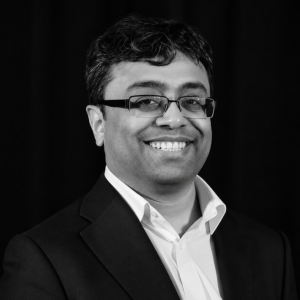
Founder — Emad Mostaque

One of the most colourful, controversial, and visionary figures in the AI industry — here is Emad Mostaque's remarkable story.

Emad Mostaque

Co-Founder & Former CEO of Stability AI

Emad Mostaque is a British-Bangladeshi entrepreneur who co-founded Stability AI in 2019 and served as its CEO until March 2024 — the period during which the company launched Stable Diffusion and reached unicorn status. His journey to becoming one of the most talked-about figures in the AI industry is unusual, dramatic, and genuinely fascinating.

Emad studied mathematics and computer science at Oxford University — one of the world's most prestigious academic institutions. After Oxford, he moved into the world of finance, working as a hedge fund analyst and manager for over a decade. He worked with and for major financial institutions, developing expertise in quantitative analysis — using mathematical models and data to make investment decisions. This financial background gave him skills in strategic thinking, risk analysis, and understanding large, complex systems.

His path to AI came through a deeply personal experience. Emad has spoken publicly about his experiences with mental health and with his autistic son, and about believing that AI technology — particularly AI that could make educational and creative tools radically more accessible — could have a transformative impact on people who have been underserved by traditional systems. This conviction became a driving force behind the founding philosophy of Stability AI: that powerful AI should be open, accessible, and available to everyone, not just elite institutions and big corporations.

Emad built Stability AI around the idea that open-source AI democratises power. In an industry dominated by companies that guard their models as competitive secrets, he championed a different philosophy: release the best AI models freely to the public, let the global community build on them, and create a world where anyone with a computer can access tools that previously required massive corporate resources. The release of Stable Diffusion in August 2022 was the purest expression of this vision, and its viral success proved the idea had enormous appeal.

He resigned as CEO in March 2024, citing a desire to pursue broader AI governance and policy work. His tenure was marked by extraordinary technical achievements but also controversy — including scrutiny of his statements about his background and the company's financial position. Regardless of these challenges, his decision to release Stable Diffusion openly is widely credited as one of the most consequential single decisions in the history of generative AI.

EducationMaths & Computer Science, Oxford University
Career BackgroundHedge fund analyst & manager for 10+ years
HeritageBritish-Bangladeshi entrepreneur
Key DecisionReleased Stable Diffusion as open source in 2022
AchievementLed Stability AI to $1B unicorn valuation in under 3 years
Post-StabilityAI governance, policy, and broader technology work
Company History

Stability AI's Journey

From a bold open-source idea to a global AI phenomenon — here is how Stability AI got there.

2019
Company Founded
Emad Mostaque co-founds Stability AI with the vision of creating powerful, open AI tools accessible to everyone. The company is incorporated and begins small, gathering a core team of AI researchers and engineers who share Emad's belief that AI development should be transparent, collaborative, and open rather than locked inside a few large corporations.
2021–2022 Early
Stable Diffusion Research
Stability AI collaborates with academic researchers at Ludwig Maximilian University of Munich and other institutions to develop the Latent Diffusion Model that would become Stable Diffusion. Unlike competing approaches, this model uses a clever technique to run efficiently — storing image information in a compact mathematical "latent space" — making it fast enough to run on consumer graphics cards rather than requiring expensive corporate server farms.
August 2022
Stable Diffusion Public Release
Stability AI releases Stable Diffusion 1.4 publicly and open source — a moment that shakes the AI industry. Within days, the model is being run by millions of users worldwide. Developers build interfaces for it, artists use it to create stunning works, and communities form around exploring its capabilities. This is the moment that puts Stability AI on the global map and validates the open-source approach to generative AI at an enormous scale.
October 2022
$101 Million Funding & Unicorn Status
Stability AI raises $101 million in funding led by Coatue Management and Lightspeed Venture Partners, giving it a valuation exceeding $1 billion and unicorn status. This is an extraordinary achievement — reaching unicorn valuation in just months after Stable Diffusion's release, driven by the massive global interest generated by the open-source model. The funding validates the open-source strategy and gives Stability AI resources to build a commercial enterprise around its models.
2022–2023
Stable Diffusion 2.x & DreamStudio
Stability AI releases Stable Diffusion 2.0 and 2.1, improving image quality and adding new capabilities. The company launches DreamStudio, its commercial web interface for AI image generation, as a revenue-generating product. Partnerships with major technology companies and platforms begin, and Stability AI starts building its enterprise API offering. The community around Stable Diffusion explodes — thousands of custom models, plugins, and tools emerge from global contributors.
2023
Product Diversification
Stability AI expands its product line dramatically. Stable Diffusion XL (SDXL) launches with significantly improved image quality and the ability to follow text prompts more accurately. The company also releases Stable Video Diffusion (for AI video generation), Stable Audio (for AI music and sound creation), Stable LM (language models for text), and Stable Code (for AI coding assistance). This signals ambition to be more than an image company — to be a full-spectrum generative AI platform.
March 2024
Leadership Change
Emad Mostaque resigns as CEO, citing a desire to focus on broader AI policy and governance work rather than company operations. The company appoints an interim leadership team as it searches for a new permanent CEO. This leadership change follows a period of internal tensions, reports of financial pressures, and public debates about the company's direction. Despite the transition, Stability AI continues operating, releasing new models and maintaining its enterprise and API services.
2024–2025
Stabilisation & Revenue Growth
Under new leadership, Stability AI focuses on financial sustainability and enterprise revenue. The company reduces losses to approximately $48.5 million pre-tax while growing revenue to approximately $55 million — demonstrating improving business fundamentals. Stable Diffusion 3.x releases with significantly better image quality, prompt adherence, and text generation within images. The enterprise API business grows as companies build on Stability AI's models for commercial applications.
AI Products & Services

What Stability AI Offers

A complete suite of open-source and commercial generative AI tools — explained simply and clearly.

Stable Diffusion

The flagship product and the model that changed the AI image generation industry forever. Stable Diffusion is an open-source AI system that generates high-quality images from text descriptions. Type any description you can imagine — a landscape, a portrait, an abstract concept, a product design — and the model produces a detailed, visually striking image in seconds. Available as free open-source code that anyone can download and run locally, and as a commercial API for developers and businesses. Has been downloaded and run by millions of users, making it one of the most widely used AI models in history.

Stable Image (DreamStudio)

Stability AI's commercial web application for AI image generation. DreamStudio provides a user-friendly interface for Stable Diffusion's image generation capabilities — a clean, well-designed website where users can generate images without needing any technical knowledge or downloads. It is the main way non-technical users access Stable Diffusion's power directly from Stability AI. DreamStudio uses a credit-based system where users purchase image generation credits, providing a straightforward path for individuals and businesses who want premium AI image generation without setting up their own technical infrastructure.

Stable Video

Stable Video Diffusion (SVD) extends the company's image AI technology into video generation. Using Stable Video, users can animate a still image — bringing it to life with natural movement and motion — or generate short video clips from text descriptions. AI video generation is one of the most exciting frontiers in generative AI, and Stability AI's open-source approach to it has made high-quality video AI accessible to developers and creators who could not afford commercial video AI alternatives. The model can generate short clips with coherent motion and impressive visual quality.

Stable Audio

Stable Audio brings Stability AI's text-to-generation approach to music and sound. Users describe the audio they want — "a relaxing jazz piano piece in a rainy café setting," "an epic orchestral battle theme," "electronic dance music with heavy bass and bright synths" — and Stable Audio generates the audio content from scratch. This product targets musicians looking for creative inspiration, content creators needing royalty-free background music, game developers creating sound effects, and anyone who wants high-quality AI-generated audio without needing musical training or expensive studio software.

Stable LM (Language Models)

Stable LM is Stability AI's family of open-source large language models for text — similar in concept to what powers ChatGPT, but released freely to the public. These models can write, summarise, answer questions, help with coding, draft emails, translate languages, and perform a wide range of other text-based tasks. Stable LM models are designed to be efficient and run on consumer hardware rather than requiring enormous data centre resources, making them particularly valuable for developers who want to build AI-powered text applications without paying expensive API fees to closed commercial providers.

Stable Code

Stable Code is an AI model specifically fine-tuned to help software developers write, understand, and debug computer code. It works like an intelligent coding assistant — suggesting completions as developers type, explaining what complicated code does in plain language, helping find and fix bugs, and generating new code from plain English descriptions. As an open-source model, Stable Code can be integrated into developer tools, code editors, and custom workflows without the usage restrictions or costs associated with proprietary code AI alternatives. This makes it particularly attractive to enterprises and independent developers who want AI coding assistance on their own infrastructure.

Stability AI API

Stability AI's commercial API allows businesses and developers to integrate all of its image, video, audio, and language AI capabilities into their own applications and workflows with just a few lines of code. Companies in e-commerce use it to generate product imagery. Marketing agencies use it to create advertising visuals. Game studios use it to generate concept art and textures at scale. The API is usage-based — customers pay per image, audio clip, or text response generated — making it accessible for projects of any scale, from individual developers testing ideas to enterprises processing thousands of generations per day.

Enterprise AI Solutions

Stability AI's enterprise offering provides organisations with access to its AI models on dedicated infrastructure — separate from the shared public API — with custom service agreements, priority support, enhanced security, and the ability to fine-tune models on proprietary company data. Enterprises in media, publishing, advertising, gaming, fashion, and technology use Stability AI's enterprise services to build custom AI image and content generation systems that reflect their specific brand requirements and content policies. Enterprise deals represent Stability AI's most significant individual revenue contracts.

Open-Source Models

Beyond the specific named products, Stability AI maintains a broad library of open-source model releases — including specialised versions trained for specific art styles, image types, and use cases. These include inpainting models (for filling in or modifying specific parts of an image), outpainting models (for extending images beyond their original boundaries), upscaling models (for increasing image resolution), ControlNet implementations (for precise control over composition using sketches or depth maps), and many more specialised tools that the open-source community has contributed to and built upon. This rich ecosystem of open models is a core part of Stability AI's value proposition.

Creative AI Tools

Stability AI continuously develops specialised creative tools that expand on its core image generation technology. These include image editing tools powered by AI that allow precise modifications to existing photos and artwork, style transfer tools that apply the visual aesthetic of one image to another, background removal and replacement tools, AI-powered upscaling that dramatically improves image resolution, and various specialised fine-tuned models for specific creative domains like architecture, fashion, product design, and digital art. These creative tools are used by professional designers, digital artists, photographers, and content creators who want AI assistance within their existing creative workflows.

The Process

How Stability AI Works

From a text description to a finished image — here is every step of the AI magic explained clearly.

1
User Prompt
Everything starts with your words — called a "prompt" in AI language. You type a description of the image you want to create. The more specific and descriptive your prompt, the more accurately the AI can generate what you imagine. You might write something like "a serene Japanese garden with cherry blossoms, a wooden bridge over a koi pond, soft morning light, photorealistic style" — and the AI will use every word to guide its creation. You can also specify a style (oil painting, watercolour, photorealistic, anime, 3D render), a mood, lighting conditions, and even the perspective or composition you want.
2
AI Model Processing
Your text prompt is immediately converted into a mathematical representation that the AI can work with — a set of numbers that captures the meaning and content of your description. Stable Diffusion uses a type of AI called a "diffusion model" — imagine starting with a completely random jumble of pixels (like TV static) and then gradually, step by step, removing the noise and shaping it towards the image your prompt describes. Each step makes the image clearer and more accurate to your description, like developing a photograph in a darkroom where the image slowly emerges from nothing. This process happens incredibly fast — in seconds rather than the hours a human artist would need.
3
Image Generation
The diffusion process runs through anywhere from 20 to 150 steps depending on the quality settings you choose. At each step, the AI refines the image — adding detail, correcting proportions, improving lighting, and making the overall image more coherent and realistic. The AI "knows" what things look like because it was trained on hundreds of millions of images from the internet, learning patterns like how light falls on different surfaces, what different art styles look like, how human faces are structured, what different textures feel like visually, and countless other visual concepts. It combines all this learned knowledge to construct an image that matches your description.
4
Quality Enhancement
Once the initial image is generated, additional AI processes can be applied to improve quality. Upscaling AI increases the resolution of the generated image — turning a relatively small image into a large, detailed one without losing sharpness. Detail enhancers can add finer textures and micro-details that the initial generation process might have left rough. Stable Diffusion's unique "latent space" approach means initial generation happens at a compressed scale and is then decoded into full quality — a clever technique that makes the process faster than older approaches while still delivering impressive visual results.
5
Editing & Refinement
If the first result is close but not exactly right, you have multiple tools to refine it. "img2img" (image-to-image) lets you upload the generated image and regenerate it with modifications — keeping the overall composition but changing specific elements. "Inpainting" lets you select any specific area of the image and regenerate just that section with different instructions. You can adjust your text prompt to emphasise different aspects, change the visual style, alter lighting, or modify the content. Many users cycle through several generations and refinements before arriving at their perfect image — the process is collaborative between human creativity and AI execution.
6
Download
When you are happy with the result, download your finished image as a high-quality PNG or JPEG file. Images generated through the commercial API or DreamStudio are delivered at print-ready resolution suitable for professional use. For users running Stable Diffusion locally, the image is saved directly to their computer. The output file has no watermarks on paid plans, is available for commercial use under Stability AI's licence terms (always check the current terms for the specific model version), and can be used as a starting point for further editing in standard image editing software like Photoshop or GIMP.
7
Creative Use
The generated image is now yours to use in whatever creative or commercial project motivated you to create it. Artists incorporate AI-generated images into larger artworks, using them as background elements, reference images, or starting points for hand-painted pieces. Designers use them for mood boards, concept presentations, and client proposals. Game developers use them for concept art and texture inspiration. Marketers use them for social media content, advertising visuals, and website imagery. Publishers use them for book covers and editorial illustration. The range of creative uses is limited only by your imagination — and Stability AI's open approach means there are no restrictions on what you can create as long as it complies with the terms of service.
Revenue & Strategy

How Stability AI Makes Money

A detailed look at how an open-source AI company generates revenue and builds a sustainable business.

API Revenue

Developers and businesses access Stability AI's image, video, audio, and language models through its commercial API, paying per generation. A company building an e-commerce product photography tool might generate thousands of images per day through the API — paying for each batch generated. This usage-based model scales directly with customer growth, creating a revenue stream that expands as API customers' own businesses grow. The API is Stability AI's primary commercial product for technical customers and represents its most scalable revenue channel, with customers ranging from individual developers to major media companies.

Enterprise AI Contracts

Enterprise customers who need dedicated infrastructure, custom model fine-tuning, guaranteed service levels, and long-term support contracts pay premium annual fees for Stability AI Enterprise access. These customers include advertising agencies, game development studios, media publishers, fashion companies, and technology platforms that have made Stability AI's models central to their production workflows. Enterprise contracts are typically worth tens of thousands to hundreds of thousands of dollars per year and provide Stability AI with its most predictable and substantial revenue, alongside the API business.

Licensing

Some Stability AI models — particularly newer versions — are released under licences that allow free use for personal and research purposes but require a commercial licence for business applications. This dual-licence approach allows the company to maintain its open-source community presence while generating revenue from commercial users who build products on its models. Licensing revenue has been part of Stability AI's strategy as it balances its open-source identity with the need to generate sustainable commercial returns on its AI research investment.

DreamStudio Subscriptions

Individual users and small creative teams use DreamStudio — Stability AI's web interface — on a credit-based subscription model. Users purchase image generation credits that can be spent on creating images with different quality and resolution settings. While individual users generate less revenue than enterprise contracts, the large number of creative professionals, designers, and hobbyists using DreamStudio makes it an important revenue component and a vital part of Stability AI's consumer presence and brand visibility in the creative AI market.

Partnerships

Stability AI has established technology partnerships with hardware companies, cloud platforms, and software businesses that embed Stability AI's models into their own products and platforms. Partners pay fees or revenue-sharing arrangements for the right to distribute Stability AI technology as part of their own offerings. Notable partnerships include integrations with major cloud providers, creative software platforms, and productivity tools that add AI image generation capabilities powered by Stable Diffusion. These partnerships extend Stability AI's market reach beyond direct customers to the users of partner platforms.

Open Source Strategy

Stability AI's open-source strategy is both a product philosophy and a business strategy. By releasing powerful models freely, Stability AI builds enormous brand awareness, developer goodwill, and community engagement at zero marketing cost — the open-source community essentially markets the technology through enthusiastic adoption and word-of-mouth. This community then becomes a potential funnel for commercial products and API services. The open-source models also attract top research talent who want to work on impactful, widely-used technology. While open source does not directly generate revenue, it creates the visibility, trust, and adoption that support all commercial revenue streams.

Investment & Revenue

Funding & Financial Journey

From early investment to unicorn status — here is how Stability AI has grown financially, and what the numbers mean in simple terms.

$1B+
Peak Valuation
Achieved unicorn status in October 2022 — one of the fastest AI companies to cross the $1 billion threshold after going public with a major product.
$101M
Initial Funding Round
Raised $101 million in October 2022, led by Coatue Management and Lightspeed Venture Partners. This was the round that produced the $1B+ valuation and unicorn status. A massive achievement for a company barely known a year earlier.
$231–399M
Total Funding
Stability AI has raised between $231 million and $399 million across multiple private funding rounds — the exact total varies by source as some funding details were not publicly disclosed. This capital funded operations, team building, and model research.
~$55M
Revenue (2024)
Approximately $55 million in revenue during 2024, primarily from API usage, enterprise contracts, and DreamStudio credits. This represents significant improvement as the company works toward financial sustainability.
$48.5M
Reduced Pre-Tax Losses
Stability AI reduced its pre-tax losses to approximately $48.5 million — a sign of improving financial discipline and increasing revenue. The company is working to bring revenue and costs into balance.
Coatue
Lead Investor
Coatue Management — a technology-focused hedge fund with a strong track record of backing successful tech companies — led the $101M round, validating Stability AI's potential at the highest level of technology investment.
Lightspeed
Co-Lead Investor
Lightspeed Venture Partners — one of Silicon Valley's most respected venture firms, also an early investor in Snapchat, Epic Games, and Affirm — co-led the initial round alongside Coatue, bringing significant credibility and networks.

Context on the Numbers: Stability AI's financial journey has been complex. The company experienced high expenses during periods of rapid scaling, and there have been well-publicised reports of financial pressures. However, reducing losses while growing revenue in 2024 suggests the business is moving toward a more sustainable model. For context, many well-known tech companies — including Amazon, Spotify, and Uber — ran at significant losses for years before achieving profitability, using investor capital to build market position first.

Real-World Impact

Industries Using Stability AI

Stable Diffusion and Stability AI's broader model suite are transforming creative and commercial workflows across virtually every visual industry.

Graphic Design
Graphic designers use Stable Diffusion to generate concept variations, create custom illustrations, produce unique background textures and patterns, and rapidly prototype visual ideas that would take hours to create manually. AI-generated assets serve as starting points that designers then refine and incorporate into finished work, dramatically accelerating creative workflows.
Advertising
Ad agencies and in-house marketing teams generate campaign visual concepts, product placement imagery, lifestyle photography alternatives, and advertising artwork using Stability AI. The ability to generate dozens of visual variations in minutes — rather than commissioning multiple photoshoots — transforms the speed and cost of advertising creative production.
Marketing
Content marketers, social media managers, and digital marketing teams generate custom imagery for every platform and campaign without stock photo fees or production costs. AI-generated visuals can be tailored precisely to brand guidelines, campaign themes, and target audience preferences — in any style, setting, or aesthetic direction the marketing strategy requires.
Gaming
Game developers use Stable Diffusion for concept art generation, character design exploration, environment and landscape creation, texture generation, UI element design, and promotional artwork. Indie developers who could not afford professional concept artists can now visualise their game worlds completely. Large studios use it to dramatically accelerate the early stages of visual development.
Film & TV Production
Film production companies use AI image generation for storyboarding, set design visualisation, costume concept exploration, and pre-production visual development. Before spending budgets on physical sets and production design, filmmakers can rapidly generate visualisations of how different creative directions would look — making pre-production faster and more collaborative.
Education
Educators and educational content creators use Stable Diffusion to generate custom illustrations for educational materials, books, and presentations without the cost of commissioning professional illustrators. History teachers can generate historically accurate depictions of ancient scenes. Science communicators can visualise complex concepts. Online course creators can produce unique thumbnail images and course artwork that distinguishes their content.
Fashion
Fashion designers use AI image generation to rapidly visualise garment concepts, pattern designs, and collections without needing to produce physical samples for every creative idea. AI helps explore colour variations, textile patterns, and style directions in minutes, allowing designers to refine their vision before committing to expensive material and production costs. Retail brands use it for product visualisation and campaign imagery.
Architecture
Architects and interior designers use AI image generation to produce visualisations of proposed spaces, building facades, and design concepts that communicate design intent to clients without expensive 3D rendering software. AI-generated architectural images can explore different material choices, lighting conditions, and aesthetic directions rapidly — accelerating client consultations and design approvals significantly.
Healthcare
Medical educators and healthcare communicators use AI image generation for medical illustration — creating visualisations of biological structures, disease processes, treatment procedures, and anatomical diagrams for educational materials. Healthcare organisations also use it for patient-facing communication materials, making complex medical information more visually engaging and easier to understand.
Publishing
Book publishers, authors, and independent writers use Stable Diffusion to generate cover art, interior illustrations, and promotional imagery for their publications. Indie authors who cannot afford professional cover designers can generate professional-looking book covers at minimal cost. Publishers exploring new visual directions for established series can rapidly test different artistic styles before commissioning final artwork.
Social Media
Content creators, influencers, and social media managers generate unique, eye-catching imagery for their platforms at the speed the modern content calendar demands. Rather than relying on stock photos or expensive custom photography for every post, creators can generate fresh, original visuals for any content theme, holiday, or campaign concept in minutes — maintaining a distinctive, consistent visual presence across channels.
E-commerce
Online retailers use AI image generation to create product imagery, lifestyle photography showing products in use, and promotional visuals without the cost of traditional product photography sessions. Sellers on platforms like Etsy, Amazon, and Shopify use Stable Diffusion to create professional-looking listings even for products they have not yet manufactured — helping validate product concepts with customer interest before committing to inventory production.
Why Stability AI Wins

Competitive Advantages

What makes Stability AI unique in a market that now includes some of the world's largest technology companies.

Open Source Leadership
No other major AI image company has committed as fully to open source as Stability AI. Releasing Stable Diffusion's code and weights freely created an unparalleled developer ecosystem, accelerated adoption, and made Stability AI synonymous with open AI for millions of users worldwide.
Outstanding Image Quality
Stable Diffusion XL and Stable Diffusion 3 produce images that rival or surpass competing commercial models. The visual quality, prompt adherence, and artistic capability of Stability AI's flagship models consistently rank among the best available in independent quality comparisons.
Speed of Generation
Stable Diffusion's latent space architecture enables fast image generation — most images generate within seconds, even at high quality settings. For enterprise customers with high-throughput needs and API users running batch generation jobs, this speed efficiency translates directly into lower costs per image.
Creative Freedom
Open-source models can be run locally with fewer content restrictions than commercial closed APIs. For legitimate artistic, research, and creative applications, this freedom allows artists and researchers to explore creative directions that commercial content filters might unnecessarily restrict.
Runs on Consumer Hardware
Stable Diffusion was specifically designed to run on consumer-grade graphics cards — the same hardware millions of gamers and creative professionals already own. This makes it the only major AI image model that can be run completely offline on a personal computer, with no cloud dependencies and no usage fees.
Massive Community
Millions of developers, artists, and AI enthusiasts around the world have contributed to the Stable Diffusion ecosystem — creating tools, trained models, workflows, and documentation that make the technology more powerful and accessible. This community represents an extraordinary asset that money cannot simply buy.
Continuous Innovation
Stability AI consistently pushes forward with new model releases, new capabilities, and new product lines. From the original Stable Diffusion to SDXL to SD3, and from images to video to audio to code, the company continues to expand the frontier of what its open-source AI platform can do.
Developer-First API
Stability AI's commercial API is well-documented, straightforward to integrate, and competitively priced. Developers appreciate clear documentation, predictable pricing, and the ability to access the same models they may already use in open-source form — ensuring consistent quality between development and production environments.
Honest Assessment

Challenges Facing Stability AI

An honest look at the significant challenges Stability AI navigates in a competitive and evolving landscape.

Copyright & IP Issues
Stable Diffusion was trained on images scraped from the internet, including images protected by copyright. Artists, photographers, and stock image companies have raised serious legal challenges about this — questioning whether AI companies have the right to train models on copyrighted work without permission or compensation. Several lawsuits have been filed against Stability AI specifically, and the legal outcomes could significantly impact how future AI image models are trained.
Intense Competition
The AI image generation market has become extremely competitive. Midjourney (which many users consider to produce the most aesthetically beautiful results), Adobe Firefly (with its advantage of being integrated directly into Photoshop), OpenAI's DALL-E, and Google's Imagen all compete directly. Well-funded, well-resourced competitors can outspend Stability AI on model research and marketing while having advantages in distribution and existing user bases.
Financial Sustainability
Stability AI has faced well-publicised financial pressures — significant losses, challenges attracting follow-on investment at earlier terms, and periods of operational difficulty including reported difficulties meeting payroll. While the company has shown improvement in 2024, achieving sustainable profitability with a business model that includes freely distributing its core product remains an ongoing challenge that requires continued focus.
AI Ethics & Deepfakes
Open-source AI image generation can be misused to create non-consensual intimate imagery, political misinformation, deepfakes of public figures, and other harmful content. Because Stability AI's models are freely available and can be run without any content filtering, controlling misuse is significantly harder than for closed commercial systems. This creates reputational risk and draws regulatory attention.
Infrastructure Costs
Training large AI models requires enormous amounts of expensive computing power. Stability AI spent heavily on GPU computing infrastructure during its growth phase, contributing to its financial losses. Ongoing model research and inference infrastructure for commercial API services continue to represent significant costs that must be covered by revenue from an increasingly competitive market.
Regulations
Governments around the world are creating new regulations for generative AI — covering training data practices, content disclosures, synthetic media labelling, and liability for AI-generated content. The EU AI Act and potential US legislation could impose compliance requirements that are particularly complex for a company whose models run freely on millions of third-party computers rather than within controlled corporate infrastructure.
Looking Ahead

The Future of Stability AI

Despite challenges, the opportunities ahead for Stability AI and the technology it pioneered are enormous.

Next-Gen AI Images
Future Stable Diffusion models will produce even more photorealistic, detailed, and creatively expressive images — with better understanding of complex scenes, improved text rendering within images, and greater fidelity to nuanced creative prompts. The gap between AI-generated and professional photography will continue to narrow.
AI Video Revolution
Stable Video Diffusion and future video models will enable the creation of longer, higher-quality, more controllable AI-generated video. Full AI video production — where entire scenes and short films are generated from text descriptions — is on the horizon, potentially transforming entertainment, education, and marketing content creation.
AI Music & Audio
Stable Audio and future audio models will enable anyone to create professional-quality music, soundscapes, and sound effects from text descriptions. This technology has the potential to democratise music production the way Stable Diffusion democratised visual art — making professional-quality audio creation accessible to creators who do not have musical training.
AI Coding Assistance
Stable Code and future coding models will become standard tools in software development environments — helping developers write better code faster, learn new programming languages, debug complex systems, and build applications even without deep technical expertise. Open-source coding AI running locally will be particularly attractive for enterprise developers concerned about code privacy.
Enterprise AI Growth
As businesses increasingly adopt generative AI for visual content creation, the enterprise market for Stability AI's models is expected to grow significantly. The ability to fine-tune open-source models on proprietary brand data — creating custom AI image generators that reflect specific visual styles and brand guidelines — is a compelling enterprise value proposition that closed commercial systems cannot easily match.
Scientific Research
AI image and multimodal models have extraordinary potential in scientific domains — generating molecular visualisations for drug discovery, creating satellite image analysis tools, assisting with medical imaging interpretation, and producing scientific illustrations. Stability AI's open-source approach makes its models particularly accessible for academic and research applications.
Creative Industries
The creative industries — from animation and film to publishing and advertising — will increasingly adopt AI image generation as a standard part of their production workflows. Stability AI, as the pioneer of open-source image AI, is positioned to be a core technology provider across these industries as AI tools move from experimental novelties to essential production infrastructure.
Multimodal AI Future
Future AI systems will seamlessly combine text, image, video, audio, and code generation — understanding and creating across all these modalities in unified AI experiences. Stability AI's broad product portfolio positions it to participate in this multimodal future, providing open-source alternatives to the large closed multimodal models being developed by OpenAI and Google.
Market Landscape

Stability AI vs. Competitors

How does Stability AI compare to the other major players in AI image and generative AI technology?

CompanyFoundedHQImage AIOpen SourceRuns LocallyAPIBest Use Case
Stability AI2019London 🇬🇧✓ Stable Diffusion✓ Fully openOpen-source projects, local AI, developers
Midjourney2021San Francisco 🇺🇸✓ Best aesthetics✗ Closed✓ LimitedArtists, premium image quality
OpenAI (DALL-E)2015San Francisco 🇺🇸✓ DALL-E 3✗ ClosedGPT-integrated apps, casual creation
Adobe Firefly1982San Jose 🇺🇸✓ In Photoshop✗ Closed✓ LimitedProfessional designers in Adobe ecosystem
Google Imagen1998Mountain View 🇺🇸✓ Imagen 3✗ Closed✓ Vertex AIGoogle Cloud enterprise customers
Balanced View

Pros & Cons of Stability AI

A fair and honest assessment — what Stability AI does brilliantly and where it faces real limitations.

What Stability AI Does Well
  • Only major AI image company to fully open-source its best models
  • Stable Diffusion can run locally on consumer graphics cards — no internet needed
  • Enormous community ecosystem of tools, extensions, and custom models
  • API competitively priced versus closed commercial alternatives
  • Freedom to fine-tune models on custom data for specific use cases
  • No usage restrictions for locally-run open-source versions
  • Expanding beyond images into video, audio, and code AI
  • Stable Diffusion 3 image quality rivals best commercial models
  • Privacy-first option — no data sent to corporate servers when run locally
  • Pioneered the open-source approach that democratised generative AI
Areas of Concern
  • Financial sustainability remains a challenge — has operated at losses
  • Leadership instability following founder's resignation in 2024
  • Ongoing legal challenges related to training data copyright
  • Midjourney often rated better for aesthetic image quality
  • Less accessible for non-technical users than cloud-only competitors
  • Open source makes misuse (deepfakes, NSFW content) harder to prevent
  • DreamStudio web interface less polished than some commercial alternatives
  • Enterprise sales motion less mature than Google, Microsoft, Adobe
Did You Know?

15 Fascinating Facts About Stability AI

Surprising, remarkable, and inspiring facts about the company that changed AI image generation forever.

Fact 01
Stable Diffusion's public release in August 2022 was compared by many AI researchers to a "nuclear bomb" going off in the generative AI industry — it was that consequential. Within days, it was downloaded by millions of users and began a creative revolution that permanently changed how AI image generation was understood and adopted.
Fact 02
Stable Diffusion was designed to run on a consumer GPU with just 4GB of VRAM — the kind of graphics card found in millions of ordinary gaming computers. This was intentional: Emad Mostaque wanted the model to be usable by anyone with a decent gaming PC, not just organisations with expensive server hardware.
Fact 03
The original Stable Diffusion model was developed in collaboration with academic researchers at Ludwig Maximilian University of Munich (LMU Munich) in Germany — specifically the lab of Professor Robin Rombach, whose team published the original "Latent Diffusion Models" research paper that Stable Diffusion is based on. This academic collaboration is a rare example of research-to-production in just months.
Fact 04
Stability AI went from relative obscurity to a $1 billion unicorn valuation in just weeks after Stable Diffusion's release — one of the fastest valuations in AI startup history. The $101 million funding round that gave it unicorn status was raised in October 2022, just weeks after the August 2022 model release that made it famous.
Fact 05
Stable Diffusion has been downloaded and run by more people than almost any other AI model in history. Hundreds of millions of images have been generated with Stable Diffusion models — making it arguably the most culturally impactful AI model ever released in terms of the sheer number of people who have directly used it.
Fact 06
The open-source ecosystem around Stable Diffusion has produced thousands of tools, custom models, and user interfaces — many of them better than Stability AI's own official products. AUTOMATIC1111's Stable Diffusion WebUI became the most widely used AI art tool in the world despite being a community project, not an official Stability AI product.
Fact 07
Emad Mostaque, the founder, is British-Bangladeshi — representing one of the more diverse founder backgrounds in the AI industry, which has been criticised for being dominated by a narrow demographic. His stated motivation for democratising AI access has a personal dimension rooted in understanding what it means to be from a community underserved by Western technology gatekeepers.
Fact 08
Stability AI is at the centre of one of the most significant copyright lawsuits in AI history. A group of artists sued Stability AI, arguing that training Stable Diffusion on their copyrighted artwork without permission violated their rights. How this case resolves could set legal precedent affecting the entire AI industry's ability to train models on internet-sourced data.
Fact 09
Stable Diffusion can be fine-tuned using just 20–30 images of a person, product, or style — a technique called DreamBooth. This means anyone can train a personalised version of the model to generate images in their own likeness, of their specific product, or in their unique visual style. The implications for personalisation, marketing, and content creation are enormous.
Fact 10
One of the most remarkable things about Stability AI's open-source strategy is that it costs the company very little to distribute its models — once a model is released, the cost of distribution is essentially zero since users run it on their own hardware. The company spent on training but does not pay for inference when users run Stable Diffusion locally.
Fact 11
Stable Diffusion XL (SDXL), released in 2023, was a major leap in quality — generating images at twice the resolution of its predecessor with dramatically better facial detail, text rendering, and compositional accuracy. SDXL's release restored Stability AI's reputation as a quality leader after Midjourney had gained a reputation edge with its highly aesthetic outputs.
Fact 12
The term "Stable Diffusion" refers to the technical process of "diffusion" — a type of AI model that starts with pure random noise and gradually removes the noise to reveal a coherent image. The "stable" part reflects both the company name and the reliable, consistent quality of outputs compared to earlier, less predictable generative approaches.
Fact 13
Stability AI's community-driven development model has some similarities to how Linux, Firefox, and Wikipedia were built — by combining a small professional core team with thousands of passionate global contributors. Like those projects, this model has allowed Stability AI to achieve impact that would be impossible for a company its size operating in a purely commercial, closed manner.
Fact 14
Civitai — an independent community website for sharing Stable Diffusion models, techniques, and artwork — has become one of the most visited AI-related websites on the internet, hosting hundreds of thousands of custom models created by the global community. This community activity, entirely independent of Stability AI, represents an extraordinary multiplier effect of the open-source approach.
Fact 15
Despite the business and leadership challenges Stability AI has faced, Stable Diffusion itself has never stopped being developed and improved. The model's evolution from 1.x to 2.x to XL to 3.x shows continuous progress that has kept it competitive even as larger, better-funded competitors have entered the market — a testament to both the company's technical team and the broader community contributing to its development.
Common Questions

Frequently Asked Questions

Everything people most commonly want to know about Stability AI — answered simply and clearly.

Stability AI is a British-American artificial intelligence company founded in 2019, most famous for creating Stable Diffusion — the world's most widely used open-source AI image generation model. Stable Diffusion allows anyone to generate detailed, high-quality images from text descriptions using AI, completely free of charge, and can even be run on a personal computer without sending data to any corporate server. The company also creates AI models for video (Stable Video Diffusion), audio (Stable Audio), text (Stable LM), and coding (Stable Code). Its most significant achievement is pioneering the open-source approach to generative AI image models, democratising access to creative AI tools in a way no other major company had done before.

Stable Diffusion is an AI image generation model that creates images from text descriptions using a process called "latent diffusion." Here is how it works in simple terms: the AI starts with pure random noise — imagine a screen full of static like an old TV — and then gradually transforms that noise into a coherent, detailed image that matches the text description you provided. This transformation happens in many small steps, with each step making the image clearer and more accurate to your description. The model "knows" what things look like because it was trained on hundreds of millions of images from the internet, learning the visual patterns of faces, landscapes, objects, art styles, and countless other subjects. What makes Stable Diffusion special compared to similar models is that it operates in a compressed mathematical space (called "latent space") rather than working with full-resolution images at every step — this clever approach makes it fast enough and memory-efficient enough to run on consumer graphics cards that millions of people already own.

Yes — Stable Diffusion is free to download and use. Most versions of Stable Diffusion (1.x, 2.x, and XL) are released under the CreativeML Open RAIL-M licence, which allows free use for both personal and commercial purposes with some restrictions — primarily around not using it to create content that causes harm or violates laws. You can download the model files from Stability AI's website or from the Hugging Face model repository and run them on your own computer completely free of charge. The main requirement for running it locally is a graphics card (GPU) with sufficient memory — typically at least 4GB VRAM for the standard models, or 8GB+ for better performance and higher quality. There is also a web interface called DreamStudio where you can use Stable Diffusion online without any downloads, which uses a credit-based system where you purchase credits for image generation.

Stability AI was co-founded by Emad Mostaque, a British-Bangladeshi entrepreneur who served as the company's CEO from its founding in 2019 until March 2024. Emad studied mathematics and computer science at Oxford University before spending over a decade as a hedge fund analyst and manager. His path to founding Stability AI was shaped by his belief that powerful AI technology should be open and accessible to everyone, not locked within a small number of large corporations. He was particularly motivated by personal experiences seeing how language barriers and the cost of professional content limited access to education and creative tools for people from non-English-speaking backgrounds. Emad resigned as CEO in March 2024, saying he wanted to focus on AI governance and policy work rather than company operations. Several other co-founders also contributed to the company's early development, but Emad was its most prominent public figure and the person most closely associated with its open-source philosophy.

Emad Mostaque resigned as CEO of Stability AI in March 2024. He announced his departure publicly, stating his intention to pursue work on broader AI governance, policy, and what he called "decentralised AI" — efforts to ensure AI development benefits humanity broadly rather than being controlled by a small number of powerful entities. His departure came after a period of significant scrutiny — public and media investigations raised questions about some statements he had made about his background and about Stability AI's financial position. Despite the controversies that surrounded his tenure, his decision to release Stable Diffusion as open source is widely regarded as one of the most consequential single decisions in the history of generative AI, having enabled millions of people worldwide to access and build on AI image generation technology. After his departure, Stability AI appointed an interim leadership team while searching for a new permanent CEO.

Stability AI has raised approximately $231 million to $399 million in total funding across multiple private funding rounds — the exact figure varies depending on which rounds have been publicly confirmed. The most significant and well-documented round was the $101 million raised in October 2022, led by Coatue Management and Lightspeed Venture Partners, which gave Stability AI a valuation exceeding $1 billion and unicorn status. Additional funding rounds followed, though the company has also faced periods of financial difficulty and has reportedly struggled to raise follow-on capital at its earlier high valuation. For context, $231–399 million is significantly less funding than direct competitors like Midjourney or OpenAI — which makes Stability AI's impact and the breadth of its product portfolio all the more remarkable given its relatively constrained resource base.

Stability AI generated approximately $55 million in revenue during 2024. This represents meaningful growth for a company that faced significant financial pressure in previous years. In the same period, the company's pre-tax losses were reduced to approximately $48.5 million — a significant improvement from prior years when losses were substantially higher relative to revenue. Stability AI's revenue comes primarily from its commercial API (where businesses and developers pay per image, video, or audio generation), enterprise licensing agreements (where large organisations pay for dedicated access and custom model fine-tuning), and DreamStudio credit purchases (where individuals pay for convenient web-based access to the models). The company's primary challenge remains achieving profitability — balancing investment in AI research, which is expensive, against commercial revenue in a competitive market.

Stability AI made Stable Diffusion open source primarily because of founder Emad Mostaque's deep conviction that powerful AI tools should be freely accessible to everyone — not just to large corporations or wealthy individuals. He believed that keeping AI models proprietary concentrates enormous power and advantage in a small number of companies and countries, while open-sourcing them allows the entire global community to benefit, improve, and build on the technology. There were also practical strategic reasons: open-sourcing the model generated enormous brand awareness and community engagement at zero marketing cost; it attracted top AI talent who wanted to work on widely-used, impactful technology; it rapidly built an ecosystem of third-party tools and custom models that made Stable Diffusion more powerful; and it established Stability AI as a champion of open AI in a way that differentiated it sharply from OpenAI, Midjourney, and Google. The open-source release proved to be one of the most effective product launches in AI history, generating global press coverage and millions of users essentially overnight.

Stability AI (Stable Diffusion) and Midjourney are the two most widely used AI image generation systems, but they have very different approaches and appeal to different users. The key differences: Stable Diffusion is open source and can be run completely free on your own computer; Midjourney is a closed commercial service that requires a paid subscription and is only accessible through Discord. Stable Diffusion gives users maximum flexibility — you can modify it, fine-tune it on custom data, use it without internet access, and integrate it into any application; Midjourney offers much less flexibility but is simpler to use. Image quality is subjective, but many users consider Midjourney to produce more consistently aesthetically pleasing results "out of the box" — particularly for artistic and cinematic images — while Stable Diffusion XL and SD3 can match or surpass Midjourney quality with the right settings and prompts. Midjourney has a very strong community on Discord where style inspiration is abundant; Stable Diffusion has an even larger open-source community with thousands of custom models and tools. The right choice depends on your needs: Midjourney for the easiest path to beautiful results; Stable Diffusion for maximum control, customisation, and freedom.

Stable Diffusion XL (SDXL) is a significantly upgraded version of Stable Diffusion released by Stability AI in 2023. Compared to Stable Diffusion 2.x, SDXL generates images at higher native resolution (1024×1024 versus 512×512), with dramatically better facial detail and human anatomy, significantly improved text rendering within images (being able to accurately display words written in the image), better understanding of complex compositional prompts, and more diverse artistic style support. SDXL uses a two-stage model architecture — a base model that creates the initial image composition and a separate "refiner" model that enhances detail and quality — which together produce noticeably superior results. SDXL is released as open source under the same terms as previous Stable Diffusion versions, making it freely available for personal and commercial use. It remains one of the most capable open-source image generation models available and is widely used by the community.

Stable Diffusion 3 (SD3) is the latest major generation of Stability AI's flagship image model, released in 2024. It represents a significant architectural advancement over SDXL — using a "multimodal diffusion transformer" (MMDiT) architecture that combines text and image information more deeply than previous approaches, resulting in much better prompt adherence (the image more accurately matches what the prompt describes), dramatically improved text rendering within images, better compositional accuracy with complex scenes, and overall higher fidelity results. SD3 comes in multiple sizes, with the larger models producing higher quality results at the cost of greater computing requirements. Like its predecessors, SD3 is available as open source, though Stability AI has used a licensing approach that requires a commercial licence for business use while remaining free for personal and research purposes. Many consider SD3 to be competitive with or surpassing the best closed commercial image models at comparable settings.

The commercial licensing terms for Stable Diffusion vary by model version. The original Stable Diffusion 1.x and 2.x models were released under the CreativeML Open RAIL-M licence, which permits both personal and commercial use subject to certain restrictions — primarily around not using the models to create content that causes harm, violates laws, or is explicitly prohibited in the licence. SDXL similarly permits commercial use under its SDXL licence. Stable Diffusion 3 uses a different approach — it is available for personal and research use under an open licence, but commercial use requires a paid commercial licence from Stability AI. This tiered approach allows Stability AI to maintain an open-source community presence while generating revenue from commercial users. Always check the specific licence for the exact model version you are using, as licensing terms have evolved across different releases and may continue to change.

Stable Video Diffusion (SVD) is Stability AI's AI video generation model, released as open source in late 2023. It extends the principles of Stable Diffusion image generation into the temporal dimension — creating short video clips rather than still images. SVD can animate a still image (bringing it to life with natural motion) or generate short video clips from scratch with a conditioned starting frame. The model generates clips of several seconds at smooth frame rates with coherent motion that maintains consistency across frames — a technically challenging problem that earlier video AI models struggled with. SVD is significantly smaller and more efficient than competing closed video AI systems like Runway or OpenAI's Sora, though it also generates shorter clips and has less temporal coherence over longer sequences. As an open-source model, SVD can be downloaded, run locally, fine-tuned for specific video styles, and integrated into custom applications — following the same democratising approach that made Stable Diffusion so influential in AI imagery.

The copyright controversy around Stable Diffusion centres on the training data used to develop the model. Stable Diffusion was trained on LAION-5B — a massive dataset of images and their captions collected by scraping the internet. This dataset includes hundreds of millions of images that are protected by copyright — belonging to artists, photographers, illustrators, stock image companies, and other rights holders who never gave permission for their work to be used for AI training. Artists and creators have raised several concerns: that their work was used without consent or compensation; that AI models trained on their work can now generate images in their style on demand, threatening their livelihoods; and that the models might reproduce copyrighted content. Several lawsuits have been filed against Stability AI, Getty Images, and others involved in similar training practices. These cases are still working through the courts, and their outcomes could have profound implications for the entire AI industry's ability to train models on internet-sourced data — potentially requiring licensing agreements with rights holders for training data, or forcing AI companies to retrain models on consent-verified datasets.

Yes — and this is one of Stable Diffusion's most distinctive features. You can download Stable Diffusion model files and run them locally on your own computer without needing internet access, cloud services, or paying any usage fees. The main requirements are: a graphics card (GPU) with sufficient video memory — most Stable Diffusion models need at least 4GB VRAM for the 1.5 model, 8GB for SDXL. Nvidia GPUs work best (using CUDA acceleration), though AMD GPUs work with some extra setup, and Apple Silicon Macs can also run Stable Diffusion with good performance. The most popular way to run it locally is using AUTOMATIC1111's Stable Diffusion WebUI (a community-created interface) or ComfyUI — both are free, feature-rich, and well-documented. When running locally, your images never leave your computer — complete privacy. The generation speed depends on your GPU, but modern consumer cards can generate a 512×512 image in 2-10 seconds and a 1024×1024 SDXL image in 10-30 seconds, which is fast enough for comfortable creative use.

DreamStudio is Stability AI's official commercial web application for AI image generation — a clean, user-friendly website where anyone can generate images using Stable Diffusion without needing to download or install anything. It is designed for users who want a straightforward, hassle-free way to create AI images through a browser without the technical setup required to run Stable Diffusion locally. DreamStudio uses a credit-based pricing system — new users receive a generous amount of free credits when they sign up, and can purchase additional credits when needed. Each image generation costs a small number of credits depending on the quality and size of the image requested. The interface allows you to adjust the text prompt, choose between different model versions, set the image style and aspect ratio, adjust quality settings, and browse your generation history. DreamStudio is ideal for casual users, professionals who want a convenient cloud-based option, and anyone evaluating Stable Diffusion's capabilities without committing to a local setup.

Stability AI's technology — particularly Stable Diffusion — is used across a remarkably wide range of industries. In graphic design and advertising, professionals use it to generate concept art, campaign visuals, and custom illustrations. In gaming, developers create character designs, environment concepts, textures, and promotional artwork. In film and TV production, it speeds up pre-production storyboarding and concept visualisation. In e-commerce, sellers generate product imagery and lifestyle photography. In fashion, designers visualise garment concepts and textile patterns. In architecture, firms generate building visualisations and interior design concepts. In education, teachers and content creators produce custom educational illustrations. In publishing, authors and publishers create book covers and chapter illustrations. In healthcare, medical educators generate anatomical and procedural illustrations. In marketing, teams produce social media visuals, promotional content, and advertising artwork. In fine arts, digital artists use it as a creative tool and starting point for original works. This breadth of adoption across industries reflects both the quality of the technology and the flexibility of the open-source approach that allows it to be adapted to any specific domain's requirements.

ControlNet is an extension to Stable Diffusion developed by Lvmin Zhang (a researcher at Stanford University) that gives users much more precise control over the composition and structure of generated images. Standard Stable Diffusion takes a text prompt and generates an image based purely on that description — but the exact composition, pose of figures, and spatial arrangement of elements is somewhat unpredictable. ControlNet solves this by allowing users to provide additional guidance — a sketch, a depth map, a pose estimation, an edge detection image, or other structural guides — alongside the text prompt. The AI then generates a new image that follows both the text description and the structural guide simultaneously. For example, you could draw a simple stick figure in a specific pose and have Stable Diffusion generate a realistic person in that exact pose. Or provide a rough architectural sketch and have it generate a photorealistic building that matches the sketch's proportions. ControlNet was a community innovation built on the open foundation Stability AI provided, and it dramatically expanded what was possible with Stable Diffusion — further demonstrating the value of the open-source model release strategy.

Stability AI's future depends on its ability to navigate several simultaneous challenges: achieving financial sustainability, continuing to produce world-class AI models despite having fewer resources than competitors like Google or OpenAI, building a successful enterprise business while maintaining its open-source identity, and resolving pending legal challenges around training data. On the positive side, the company has made meaningful progress in 2024 — growing revenue to approximately $55 million and reducing losses to approximately $48.5 million. The open-source community around Stable Diffusion remains one of the most active in all of AI, providing an extraordinary multiplier for the company's limited resources. Future product developments — continuing to advance Stable Diffusion, building better video and audio AI, expanding into enterprise applications — give the company multiple growth vectors. The company that best integrates generative AI into enterprise creative workflows will capture significant revenue, and Stability AI's open-source foundation gives it a genuine competitive angle versus closed commercial competitors. Most observers believe Stability AI's technology is too important and too widely adopted to simply disappear — the question is what form the company will take as it adapts to a competitive and fast-moving market.

Stability AI is headquartered in London, United Kingdom, with significant operations and team members also based in San Francisco, California, USA, and other locations globally. The company was originally incorporated in Delaware (a common choice for US-domiciled companies for legal and tax reasons) but its operational base has been centred in London, where founder Emad Mostaque is based. London has become one of the world's leading AI research and startup hubs, with a large pool of AI talent drawn from top universities like Imperial College London, Oxford, Cambridge, and UCL. Stability AI's location in London has helped it attract European AI talent and build relationships with UK and European academic institutions and enterprises. The company's global team reflects the international nature of AI research, with team members contributing remotely from multiple countries.

Final Thoughts

Conclusion

Stability AI occupies a unique and fascinating position in the history of artificial intelligence. It is not the largest AI company, nor the most heavily funded, nor the one with the most powerful models by every metric. But it may be the most consequential in terms of democratising AI — making genuinely powerful generative AI technology accessible to millions of people who would otherwise have had no access to it.

The decision to release Stable Diffusion as open source in August 2022 was a watershed moment. In a single action, Stability AI made the most capable publicly available AI image generation model free for anyone in the world to download, use, modify, and build upon. Within days, millions of people were running it. Within months, an ecosystem had grown around it that would have taken a large corporation years and billions of dollars to build. Within a year, Stable Diffusion had been used to generate hundreds of millions of images and had spawned thousands of tools, applications, custom models, and community resources that made it more powerful than any single company could have achieved alone.

Stable Diffusion's open-source release was the moment AI image generation went from being a luxury available only to those with corporate resources to a free creative tool available to every person on the planet with a computer. That is what democratisation of technology really looks like.

— Summary of Stability AI's most important contribution

The founder, Emad Mostaque, is a complex and polarising figure — celebrated for the open-source vision and criticised for statements that drew scrutiny, facing a company that achieved iconic status while struggling with financial sustainability. But his central insight — that the most powerful AI tools should be free, open, and available to everyone rather than locked behind corporate paywalls — proved both correct and consequential in ways that will echo through the history of technology.

The technology itself — Stable Diffusion and its successors — has transformed whole industries. Designers who used to spend hours creating concept images manually now generate dozens of options in minutes. Indie game developers who could never afford professional concept artists can now visualise entire game worlds. Authors without illustration budgets can create professional book covers. Researchers can generate custom scientific visualisations. Students in countries where professional creative tools were unaffordable have access to world-class AI creative capabilities. These are not trivial impacts — they represent a genuine redistribution of creative power.

Stability AI has faced real challenges — financial pressures, leadership changes, legal battles over training data, and intensifying competition from much larger and better-resourced companies. These are not trivial obstacles. The company that pioneered open-source image AI now competes with Google, Microsoft, Adobe, and OpenAI — all of which have vastly more capital, engineering resources, and distribution advantages. Sustaining its position against these competitors while remaining financially viable is an ongoing challenge that requires continued execution excellence.

Yet the open-source community that Stable Diffusion created is one of Stability AI's most enduring assets — and it belongs not just to the company but to the world. Even if Stability AI itself were to change dramatically, the code it released, the community it built, and the precedent it set for open AI development would continue. The influence of Stable Diffusion on how we think about open versus closed AI development is already baked into the industry's trajectory and cannot be undone.

For businesses considering AI tools for creative production, marketing, product design, or any visual application, understanding Stable Diffusion and Stability AI is not optional — it is essential. The open-source models are already embedded in countless tools and workflows used by creative professionals worldwide. Enterprise solutions built on Stability AI's models offer unique customisation and privacy advantages that closed commercial systems cannot match. And the commercial API provides a cost-effective path for developers and businesses who want the power of Stable Diffusion without managing their own infrastructure.

The future of generative AI is both exciting and uncertain — and Stability AI is at the heart of it. Whether through continued model development, enterprise growth, community-driven innovation, or all three, the company that released the model that started a revolution has many more chapters to write. Whatever comes next, the story of Stability AI is already one of the most remarkable in the history of artificial intelligence — a story about what happens when powerful technology is set free.

Explore Stability AI for Yourself

Try Stable Diffusion free — create stunning AI images from text, explore open-source models, or use the commercial API for your projects.