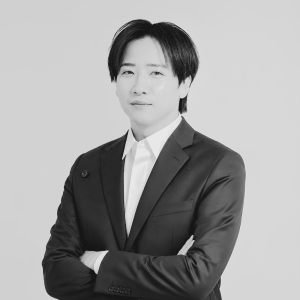
Sergiu is the person publicly credited as the maker of CinLink, an emerging AI-powered media workspace designed to make video and media production easier through simple natural-language instructions.
CinLink allows users to create, edit, search, summarize, translate, dub, subtitle and repurpose media. Instead of requiring users to work through many separate tools and complicated steps, the platform aims to let people simply explain what they want and allow AI to handle much of the routine work.
However, there is an important limitation when discussing Sergiu personally. Public information about his background is currently very limited. The strongest public evidence is a June 2026 TinyLaunch listing that describes the product as “CinLink by Sergiu.” The official CinLink website and its public documents do not currently provide his surname or a detailed personal biography.
Because of this, Sergiu's full identity has not been independently established. His surname, date of birth, birthplace, nationality, education, previous career and family background are not reliably documented in the available public sources. The research also does not establish whether he is officially the CEO, founder, co-founder or sole owner of CinLink.
For that reason, the most accurate description is simply that Sergiu is the publicly credited creator or maker of CinLink.
The Beginning of CinLink
The earliest strong public evidence of CinLink dates to June 21, 2026. BetaList listed the product on that date with a simple description focused on creating, editing, translating and repurposing video using natural language. JustLaunched independently recorded the same date.
This marked the beginning of CinLink's publicly visible journey.
During the following months, the product expanded considerably. What began as a natural-language video workflow developed into a broader media workspace covering creation, editing, transcription, subtitles, translation, dubbing, search, summarization, clipping and content repurposing.
What Is CinLink?
CinLink is built around a simple idea: people should be able to explain what they want to do with their media instead of spending time navigating many different editing tools.
A user can describe the desired result in everyday language. CinLink then works through the necessary steps and creates a draft for the user to review.
For example, a creator could ask for a long video to be turned into several short clips, formatted for different social media platforms and given captions.
The user remains involved throughout the process. They can review the result, request changes and approve the final version.
This approach is at the heart of CinLink's identity as an AI media workspace.
Sergiu's Connection to CinLink
The strongest available evidence connects Sergiu to CinLink through the product's public launch.
A TinyLaunch listing identifies the product as “CinLink by Sergiu.” This provides a clear public association between the person named Sergiu and the product.
However, the available evidence does not explain exactly which parts of CinLink Sergiu personally created.
There is no reliable public information confirming that he personally designed every part of the product, created the underlying technology, developed the media-processing systems or built every feature.
There is also no reliable evidence confirming that he is CinLink's CEO or sole founder.
Therefore, it is better to describe him as CinLink's publicly credited maker or creator rather than assigning him an unverified title.
A Different Kind of Founder Story
Many technology founders have detailed public biographies. Their education, previous jobs, earlier companies and personal motivations are often well documented.
Sergiu's story is different.
At present, the public record provides much more information about CinLink than about Sergiu himself.
There is no reliable interview explaining why he decided to create CinLink. There is no verified personal story describing a particular problem that inspired the product.
It would therefore be misleading to create a fictional story around his childhood, education or entrepreneurial journey.
The honest story is that a person publicly identified as Sergiu was credited with creating CinLink, and the product became publicly visible in 2026.
The Main Idea Behind CinLink
CinLink's central idea is to make media production easier by allowing people to describe their desired results in natural language.
Traditional media production can involve many separate activities. A creator may need to find footage, edit it, create subtitles, translate the content, prepare different versions, search through long recordings and create short clips.
CinLink aims to bring many of these activities together.
Instead of thinking about every individual step, the user can focus on the final result they want.
This makes the experience more conversational and accessible, particularly for people who may not be professional video editors.
“Shape Your Media with Your Words”
One of CinLink's central product messages is “Shape Your Media with Your Words.”
The idea behind this message is straightforward. Users should be able to tell the system what they want rather than having to learn every feature of a complicated editing application.
CinLink also uses the phrase “AI Does the Work. You Make the Call.”
This reflects an important part of the product's approach. AI is intended to handle much of the routine work, but the human remains responsible for deciding whether the final result is good enough.
These are CinLink's product statements and should not be presented as direct quotations from Sergiu.
Creating and Editing Media
CinLink supports a broad range of media tasks.
Users can work with video, images and other media while creating new content or improving existing material.
The platform publicly lists capabilities such as video creation, image generation, image-to-video creation, video editing, reframing, image enhancement, subtitles, translation, dubbing, search, summarization and short-form content creation.
The goal is to reduce the amount of repetitive work involved in producing different versions of the same content.
Transcription and Subtitles
CinLink can turn spoken words in a video into written text and timed subtitles.
Users can review the text, change the timing, adjust individual sections and prepare subtitles for the final video.
The platform also supports SRT subtitle files and the ability to place captions directly into videos.
This makes transcription useful for more than simply reading a video. The written version can also support summaries, searches, translations and short clips.
Video Translation
CinLink provides tools for translating video content into other languages.
The general process begins with the original video and its spoken content. The content can then be translated, reviewed and prepared as subtitles or a localized video.
The company identifies videos, social media clips, courses, product demonstrations, interviews and marketing campaigns as potential uses for its translation features.
Human review remains important because translations can require changes for names, cultural meaning, technical terms and timing.
AI Dubbing
CinLink also supports AI-powered video dubbing.
A translated script can be turned into a generated voice track and then matched with the video. Users can review the timing before producing the final version.
This can make it easier for creators and businesses to prepare content for audiences who speak different languages.
However, there is currently not enough reliable evidence to say that CinLink provides voice cloning. The safer description is AI voice generation and multilingual dubbing.
Video Summarization
Another important CinLink feature is video summarization.
The platform can create summaries from long recordings and identify topics, important points, highlights and timestamps.
This can be useful for webinars, interviews, courses, meetings, research material and podcasts.
For someone dealing with a long recording, a summary can make it easier to understand the main ideas without watching the entire video.
Turning Long Videos Into Shorts
Turning long videos into short-form content is one of CinLink's most visible use cases.
The process can begin with a long podcast, interview, presentation or other recording.
CinLink can help identify interesting moments, create shorter clips, add captions, adjust the format and prepare different versions.
The general process is:
Long video → Find important moments → Select clips → Edit → Add captions → Change format → Export
This is particularly useful for creators who want to turn one long piece of content into several shorter pieces for social media.
Searching Inside Videos
CinLink also aims to make large media collections easier to search.
The platform says users can search for spoken words, people, scenes, actions, on-screen text and specific moments in a video.
Instead of manually watching an entire recording to find one moment, users can describe what they are looking for and receive relevant time points.
This can be especially useful when working with interviews, podcasts, large video libraries and long recordings.
Creating Multiple Versions From One Video
One of the broader ideas behind CinLink is content repurposing.
A single piece of content can become several different assets.
For example, one long recording could be turned into:
- A shorter highlight
- Several vertical social media clips
- A square version
- A captioned version
- A translated version
- A dubbed version
- A written summary
This approach can help creators and small teams get more value from content they have already produced.
CinLink and Human Review
A major part of CinLink's approach is that AI does not have the final say.
The platform encourages users to review the generated material, request changes and approve the final result.
The basic process is:
Review → Refine → Confirm → Export
This matters because AI-generated subtitles, translations, summaries and edits may contain mistakes.
Names can be wrong. Context can be misunderstood. A translation may need adjustment. A selected clip may not make sense without additional context.
CinLink's approach keeps the human responsible for the final decision.
Local-First Approach
CinLink also emphasizes a local-first approach to media.
Its desktop experience is designed around the user's own media files, and the company says that original footage remains under the user's control.
However, local-first does not mean that every operation happens entirely on the user's computer.
CinLink's Privacy Policy explains that some activities may require online services, including certain AI processing, account services, storage, collaboration and support.
When outside services are required, information needed to complete the requested task may be transmitted.
Therefore, the most accurate description is that CinLink is local-first rather than completely offline.
CinLink on Desktop
Desktop is currently the main available CinLink platform.
The official download page lists versions for Windows and macOS.
The desktop focus fits the company's approach of working directly with the user's media files while providing a broader workspace for editing and content production.
Mobile Applications
CinLink's mobile applications are not yet generally available.
The official download information lists both iOS and Android as coming soon.
This means mobile should be described as a planned part of CinLink's future rather than an already established platform.
Future Command-Line and Agent Features
CinLink has also described a future command-line option for batch and repetitive media work, but it is currently listed as coming soon.
The company is also developing an idea called Agent Skills, which could allow other AI systems to work with CinLink's media capabilities.
If this direction develops further, CinLink could potentially become useful not only to people directly using the application but also to other AI assistants and automated workflows.
The available public information does not yet provide enough detail to describe exactly how these future features will work.
CinLink's Pricing
As of September 2026, CinLink publicly lists four plans:
Free: $0 with 100 one-time credits.
Creator: $19 per month with 2,500 monthly credits.
Studio: $59 per month with 8,500 monthly credits.
Enterprise: Custom pricing and credits.
The Studio plan is aimed at higher-volume creators and small teams, while Enterprise adds features such as team accounts, workspace management, private deployment options, API access and dedicated support.
CinLink's Business Direction
The pricing structure suggests a combination of regular subscriptions and usage-based credits.
The basic model is:
Free access → Monthly subscription → Additional credits → Enterprise services
This gives individual creators a way to try the product while providing a path toward larger teams and organizations.
The company also offers additional credit packs.
Customer Evidence
CinLink's public product story is currently stronger than its public customer story.
The company demonstrates workflows involving podcasts, launch videos, sports content, interviews, webinars and other types of media.
However, these examples should not automatically be treated as customer case studies.
The available research did not find a publicly verified customer deployment with measurable results such as hours saved, cost reductions, increased content production or return on investment.
There are also no reliable public figures establishing the number of CinLink users, customers or videos processed.
CinLink's Competitive Landscape
CinLink operates in a crowded media and AI market.
Descript offers strong capabilities around transcription, text-based editing and creator workflows.
CapCut is highly established in social and short-form video creation.
VEED provides online video editing, captions, translation and business-oriented media tools.
OpusClip focuses strongly on turning long videos into short-form clips.
Runway is strongly associated with AI-generated video and visual transformation.
Adobe Premiere Pro is particularly important because Adobe is also moving toward natural-language assistance, media search and AI-powered editing.
ElevenLabs has a strong focus on voice and dubbing, while HeyGen is known for AI video translation and multilingual video creation.
CinLink's potential difference is that it attempts to connect many of these activities into one natural-language media workflow rather than focusing on only one part of the production process.
CinLink's Biggest Opportunity
CinLink's biggest opportunity may be the growing demand for content repurposing.
Creators, businesses, educators, marketers and media teams increasingly need more content from the same source material.
A single podcast, interview or webinar can potentially produce dozens of useful assets.
The challenge is that creating those assets manually takes time.
CinLink's approach is to let AI handle much of the repetitive work while allowing the human to review and approve the results.
If the system can consistently produce useful results, this could become a meaningful advantage.
Challenges Facing CinLink
CinLink is also entering a highly competitive market.
Large companies already offer many individual features that overlap with its product.
The company must therefore show that its combined workflow is genuinely easier and more useful than using several established tools.
Another challenge is trust.
Users need confidence that subtitles are accurate, translations make sense, summaries are reliable and generated media matches their instructions.
Privacy is another important consideration because some operations may involve online services or outside providers.
Finally, CinLink's public customer and business information remains limited. More verified customer stories, usage figures and measurable results would make it easier to evaluate the company's market position.
Funding
No reliable public funding announcement was identified in the research.
There is currently no sufficiently authoritative evidence establishing venture funding, angel investment, accelerator financing, grants, valuation or named investors.
It would also be incorrect to describe CinLink as definitely bootstrapped simply because public funding information has not been found.
What Is Still Unknown About Sergiu?
As of September 7, 2026, several important personal details remain unknown.
These include:
- His full surname
- Date of birth
- Birthplace
- Nationality
- Education
- Previous employers
- Previous businesses
- Detailed professional history
- Family background
- Spouse
- Children
- Relatives
- Personal website
- Verified professional profiles
- Formal company title
- Detailed founding team
- Personal financial information
These gaps are not evidence that the information does not exist. They simply mean that it has not been reliably established in the public sources reviewed.
Why It Is Important Not to Guess Sergiu's Identity
There are several technology professionals named Sergiu in public search results.
The research specifically investigated possible connections but did not find sufficient evidence connecting those individuals to CinLink.
For this reason, Sergiu should not be identified as Sergiu Baluta, Sergiu Ardelean, Sergiu Iliev, Sergiu Matei or another similarly named person without new evidence.
Doing so could incorrectly attach another person's career and personal history to the creator of CinLink.
The Story of Sergiu and CinLink
The most interesting aspect of Sergiu's public story is therefore not a traditional founder biography.
It is the story of a product that appeared publicly in 2026 and quickly developed a broader vision for AI-powered media production.
CinLink began with a straightforward proposition: use natural language to create, edit, translate and repurpose video.
It then expanded its public capabilities to include transcription, subtitles, dubbing, search, summarization, image and video generation and multiple forms of content repurposing.
The underlying idea remained consistent: make media production easier by allowing people to describe what they want while AI handles much of the operational work.
The Future of CinLink
CinLink's future direction appears to extend beyond traditional video editing.
Mobile applications are planned. A command-line option is planned. Agent Skills point toward connections with other AI systems.
Together, these developments suggest a possible future in which CinLink becomes a broader media automation platform.
A creator might describe a desired campaign and have AI help find suitable moments, create short clips, add captions, translate the content, prepare different formats and produce versions for different audiences.
The human would still review and approve the final results.
Whether CinLink can reach that level reliably remains to be seen.
Final Assessment
Sergiu is the person publicly credited as the maker of CinLink, but his personal biography remains largely unknown.
The available public evidence does not establish his surname, education, nationality, birthplace, previous career, family background or personal motivation. It also does not provide enough evidence to assign him a formal CEO, CTO or sole-founder title.
What is much clearer is the product associated with his name.
CinLink is an emerging AI media workspace built around natural-language interaction. It brings together media creation, editing, transcription, subtitles, translation, dubbing, search, summarization and content repurposing.
Its approach is based on a simple division of responsibility: AI handles much of the routine media work, while the human reviews the result and makes the final decision.
The product's local-first desktop approach gives it another point of distinction, although CinLink's own privacy information makes clear that some operations can involve online services and outside providers.
Its future plans for mobile, batch workflows and connections with other AI systems suggest that the company may eventually move beyond being a media editing application toward a broader AI-powered media workspace.
For now, the most accurate description of Sergiu is:
Sergiu is the person publicly credited as the maker of CinLink, an emerging AI media workspace that aims to turn natural-language instructions into an easier, more connected media-production experience.
The product story is already becoming clearer, while the personal story of its creator remains largely undocumented. That distinction should remain central to any serious biography of Sergiu until additional reliable information becomes publicly available.