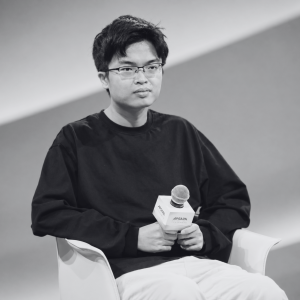
Erik Bernhardsson is a software engineer, technology executive and entrepreneur whose career has centered on a recurring problem: how to make large-scale computing and data systems easier for engineers to build and operate.
Bernhardsson is originally from Stockholm, Sweden. He studied physics at KTH Royal Institute of Technology in Stockholm and earned an M.Sc. in Physics. During his school and university years, he was heavily involved in programming competitions. His public biography notes that he won a gold medal at the International Olympiad in Informatics and participated twice in the ACM-ICPC World Finals. He also completed internships, including a six-month stint at Google in Zürich.
After university, Bernhardsson joined Spotify, where he spent approximately six years. He initially worked in Stockholm, managing the Analytics team, before moving to New York and building Spotify's machine-learning team. His work included music recommendation infrastructure and systems behind products such as Related Artists, Radio and Discover Weekly. Bernhardsson describes himself as having built the first version of Spotify's music recommendations, while noting that the systems evolved considerably afterward.
One of his important open-source contributions from his Spotify years was Luigi, a Python workflow-management system created at Spotify. Luigi helps engineers construct complex pipelines of batch jobs, manage dependencies, visualize workflows and handle failures. The Luigi project identifies Bernhardsson and Elias Freider as its principal original builders, while acknowledging contributions from many others.
Bernhardsson also worked on Annoy, an approximate-nearest-neighbor library designed for searching high-dimensional vectors efficiently. These projects reflected a broader pattern in his career: solving infrastructure problems that emerged when conventional software tools were insufficient for large-scale data and machine-learning workloads.
In February 2015, Bernhardsson joined Better.com, where he became CTO. According to his biography, he ran the company's roughly 300-person technology organization until January 2021. Better's own historical press material also identifies him as CTO and lists his previous roles at Spotify and in high-frequency trading.
His experience at Spotify and Better helped shape his thinking about infrastructure. In a 2021 essay announcing his departure from Better, Bernhardsson explained that he wanted to build his own company and was particularly interested in data engineering, data science tools and infrastructure.
That eventually became Modal.
Modal was started in 2021 by Erik Bernhardsson and Akshat Bubna. Modal's official company page identifies both as founders, while its current leadership materials identify Bernhardsson as Co-Founder & CEO and Bubna as Co-Founder & CTO.
The initial idea was to make it easier for data, ML and AI teams to run code in the cloud without spending excessive engineering effort on infrastructure. Modal says that, as early as 2020, its founders saw a need for a different infrastructure stack for data and machine-learning workloads. Teams often had to spend significant time dealing with deployment systems, containers, YAML configuration, job queues and cloud infrastructure instead of focusing on their actual applications.
Modal therefore took a deeper infrastructure approach. Rather than simply providing a thin layer over existing cloud services, the company built substantial parts of its own infrastructure, including a custom filesystem, container runtime, scheduler and container image builder.
The platform evolved from its original data-infrastructure focus toward a broader AI-native cloud. Today Modal provides infrastructure for workloads including generative-AI inference, LLM fine-tuning, batch processing, computational biology, media processing, reinforcement learning and AI-agent execution. Developers can programmatically scale workloads from zero to thousands of CPUs or GPUs, with usage-based pricing.
A major part of Modal's recent technology focus is GPU infrastructure. In 2026, Modal published details of its approach to serverless GPUs, describing infrastructure designed to make GPU compute more elastic and reduce startup latency. The company says its technology includes GPU snapshotting and infrastructure capable of scaling from zero to large numbers of GPUs without requiring customers to maintain conventional reservations.
Modal has also developed Sandboxes, isolated execution environments designed for running untrusted code. This has become particularly relevant to AI agents and coding agents, which need environments where generated code can safely execute tools and interact with systems. Modal reported in May 2026 that more than one billion sandboxes had been launched on its platform.
The company's customer base has expanded alongside its technology. Modal's public materials document use cases involving companies such as Suno, Substack, Physical Intelligence, Chai Discovery, DoorDash and others, spanning music generation, machine learning, robotics, computational biology and AI-agent infrastructure. Customer relationships and individual use cases should nevertheless be treated separately rather than assuming that every named company uses every Modal product.
Modal raised a $16 million Series A in October 2023, led by Redpoint Ventures with participation from Amplify Partners, Lux Capital, Definition Capital and others. The round brought total funding at the time to $23 million.
In September 2025, Modal announced an $87 million Series B, led by Lux Capital, with a $1.1 billion post-money valuation and total funding of $111 million.
In May 2026, Modal announced a $355 million Series C at a $4.65 billion post-money valuation, led by General Catalyst and Redpoint, with Menlo Ventures, Bain Capital Ventures and Accel joining as new investors and existing major investors participating as well. Modal said its annualized revenue had surpassed $300 million after growing fivefold since September 2025. The revenue figure is a company-reported claim, rather than independently verified financial data.
By 2026, Bernhardsson's role had evolved from building data infrastructure to leading a company positioned around the broader infrastructure requirements of modern AI. Modal describes its direction around elastic compute, low-latency inference, reinforcement learning, agent runtimes, Sandboxes and the broader model-development lifecycle.
Bernhardsson's career therefore forms a fairly clear technical progression:
Spotify → large-scale data → recommendation systems → Luigi → machine-learning infrastructure → Better.com → large engineering organizations → Modal → cloud infrastructure → GPU compute → AI inference → training → Sandboxes → AI agents.
Importantly, not every component of Modal's technology should be attributed personally to Bernhardsson. Modal is a co-founded company with a large engineering organization. Bernhardsson's documented contribution is best described as co-founder, CEO, technical leader and infrastructure/product architect, while specific systems should be attributed to the engineers and teams who built them.