The Story Begins
The parts we can verify
JJ Fiasson was born and raised in Australia and went to the University of Sydney — a fact confirmed across Crunchbase, Wikipedia-cited reporting and his own LinkedIn. What he studied there is the first genuinely interesting thing about him: a Bachelor of Liberal Studies with Honours, combining Philosophy and Immunology, completed around 2006.
That is not a founder's résumé. It is two disciplines that share one habit of mind: both are about systems that behave in ways you cannot fully predict, and about learning to reason carefully under uncertainty. Philosophy trains you to interrogate the framing of a question. Immunology trains you to think about complex adaptive systems, pattern recognition and emergent behaviour.
[ANALYSIS] Fiasson has never publicly drawn a straight line from immunology to diffusion models, and this document will not pretend he has. But it is worth noting that the person who ended up building Australia's first generative AI foundation model did not arrive via a computer science PhD. He arrived via a liberal arts degree and roughly fifteen years of building businesses.
The long, unglamorous run-up
Public records and aggregator profiles sketch a career that looks nothing like an overnight success:
| PeriodRoleNote | ||
| c. 2003–2007 | IT Consultant, PC Genius | Support, sales and consultancy. Started while still an undergraduate. [UNVERIFIED — aggregator] |
| c. 2007–2008 | Research Assistant, University of Sydney | [UNVERIFIED — aggregator] |
| c. 2008 onward | Founder / Managing Director, Cloud Business Technology | Managed-services IT company. [UNVERIFIED — aggregator] |
| c. 2015–2021 | Co-Founder / Managing Director, Loan Base | Sydney fintech-enabled mortgage broking practice, based in Surry Hills. Co-founded with Chris Gillis, later a Leonardo.Ai co-founder. Loan Base's own site names Gillis as Principal. Reports that it settled close to A$1 billion in loans before a 2021 private-equity exit come from a secondary AI-written source — [UNVERIFIED]. |
| c. 2021–2022 | Co-Founder, Raini Studios (Rainicorn) | Independent Australian game studio behind Raini: The Lords of Light, a Web3 trading card game later listed on the Epic Games Store and Google Play. [VERIFIED — Crunchbase, Raini's own channels, Epic Games Store] |
Two things matter in that table.
First: he had already done this twice. Side Stage Ventures, one of Leonardo's investors, described him in December 2023 as an experienced entrepreneur who had previously built and exited two technology businesses. He was not a first-time founder with a lucky prompt.
Second: Leonardo.Ai's founding team was not assembled from a job board. Chris Gillis came from the mortgage business. The gaming co-founders came from Raini. Fiasson had spent years working alongside these people before the company that made them famous existed.
The failure that wasn't quite a failure
[ANALYSIS] The Raini Studios chapter is the most instructive part of Fiasson's pre-Leonardo life, and the part most often skipped over.
Raini was a Web3 gaming venture launched into the 2021 crypto boom — an NFT-inflected trading card game with tokenomics, a Discord community and play-to-earn mechanics. By late 2022 the crypto market had collapsed. Raini Studios continued (it was later folded into a joint venture and kept shipping games), but the founders who went on to build Leonardo were, by their own account, already looking at a different technology.
What Raini gave them, though, was three assets that turned out to be exactly the right ones for December 2022:
- A real understanding of the art bottleneck in game production. Making a card game means commissioning hundreds of consistent illustrations. Expensive. Slow.
- Discord fluency. Raini was a Web3 project; Discord community-building was second nature. Leonardo.Ai would go on to run one of the three largest Discord servers on the planet.
- A team that already worked together under pressure.
The lesson is not "crypto was a waste of time." It is that Fiasson's team had spent a year and a half acquiring a very specific set of skills whose value they could not have predicted.
3. The Big Idea
The moment
In 2022, generative image models went public. Stable Diffusion was released with open weights. Midjourney opened its Discord. DALL·E 2 arrived.
The Leonardo founders looked at this and, per co-founder Jachin Bhasme (speaking to AdNews in October 2024), were impressed — but frustrated. Their read on how professionals were actually using these tools was that it amounted to throwing a prompt into a black box and hoping you get back what you want.
That sentence is the entire thesis of the company.
The problem they wanted to solve
For a hobbyist, a black box is fine — even delightful. For a professional, it is unusable, for one reason: consistency.
A game studio does not need one beautiful goblin. It needs forty goblins that look like they came from the same art department. A brand does not need one striking product shot. It needs a thousand assets in one visual identity. A film pre-production team needs a storyboard where the protagonist's face doesn't change between panels.
In 2022, no consumer generative tool solved this.
The market gap
| What existed (2022)What was missing | |
| Midjourney — extraordinary aesthetics, Discord-only, almost no control | Fine-grained control |
| Stable Diffusion — open, endlessly customisable, but required a GPU and technical skill | Accessibility for non-technical creatives |
| DALL·E 2 — accessible, closed, limited control | Style consistency across many assets |
| — | Ability to train a model on your own IP |
| — | Workflow tools, not just a generate button |
Bhasme's framing: "We set out to build a platform that really brought in as much control as possible with the idea of putting creatives back in the driver's seat."
The initial vision
Start with games — the vertical the team knew — then expand. Give users the ability to fine-tune models on their own datasets so outputs match a house style. Wrap it all in a web interface that a concept artist, not a machine learning engineer, could use on day one.
Fiasson's own public framing of the mission, from the December 2023 funding announcement: "Our mission is to empower creativity — whether you're a novice who loves art or a professional who creates every day."
4. Building the AI
The prototype: one month, then Christmas Eve
This is the single most quotable fact in Leonardo's history, and it comes from a co-founder on the record:
"We built a platform within a month and launched a minimum viable product on Christmas Eve of 2022." — Jachin Bhasme, AdNews
The company was incorporated in December 2022. The MVP shipped on 24 December 2022. There was no long stealth period, no eighteen-month build. [VERIFIED]
The founding team
Wikipedia lists six co-founders: JJ Fiasson, Christopher Gillis, Jachin Bhasme, Peter Runham, Sami Ede, and Ethan Smith. Fiasson himself has said in interviews that there are five co-founders including him — a discrepancy that likely reflects how "founder" versus "founding team member" is counted, and which is not resolved by any authoritative source.
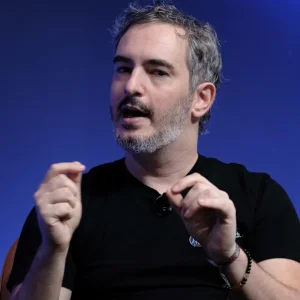
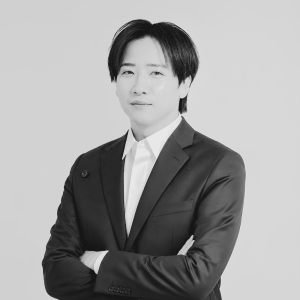
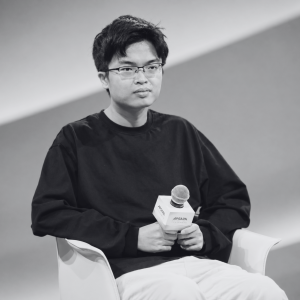
Most press coverage names three: Fiasson (CEO), Bhasme, and Gillis — the three pictured in SmartCompany's December 2023 funding photo. Forbes Australia names Fiasson, Ethan Smith and Jachin Bhasme.
Roles are commonly reported as Fiasson (CEO), Bhasme (product/COO), Smith (CTO) — though these specific title attributions come from secondary sources. [Partially unverified]
The growth curve
The numbers are the story. Every figure below is from verified reporting:
| DateRegistered usersNote | ||
| Dec 2022 | ~0 | MVP launch |
| Feb 2023 | A few thousand | Blackbird's Niki Scevak first met the team ~Feb 2023 |
| Early/mid 2023 | 14,000 | Cited by Leonardo's own X account |
| Dec 2023 | 7 million | Series A announcement; 700M+ images generated; 4.5M images/day |
| Apr 2024 | 15 million | Leonardo for Teams launch |
| Jul 2024 | 19 million | Canva acquisition; 1 billion+ items generated |
| Oct 2024 | 22 million | 5M assets/day; 719,000 marketers using it |
| Dec 2024/Jan 2025 | 29 million | Forbes Australia |
| Early 2026 | 30 million+ | 2 billion+ images |
[ANALYSIS] From a few thousand users to seven million in roughly ten months is a growth rate that virtually no company survives operationally. Leonardo did not entirely survive it — see §7.
Funding journey
Seed round (early/mid 2023) — Side Stage Ventures participated. Terms not publicly disclosed. Side Stage's Ben Grabiner has written that his firm first used an early version of the product in February 2023, six weeks after launch, and was "blown away."
Series A (announced 6 December 2023) — US$31 million (~A$47 million)
| InvestorRole | |
| Blackbird Ventures | Lead (also Canva's largest shareholder) |
| Side Stage Ventures | Co-lead / second investment |
| Smash Capital | Participant |
| TIRTA Ventures | Participant |
| Gaorong Capital | Participant |
| Samsung Next | Participant |
Only two Australian funds took part; the rest were US and UK. Capital Brief has reported that other Australian funds were allocated shares in the round and declined to invest — an expensive decision in hindsight. Post-round valuation was reported at approximately A$121 million.
Blackbird partner Niki Scevak, on the record: "The most impressive gene of JJ and the team is the speed in which they have expanded the product... They're true wild hearts with huge ambitions."
Stated use of funds: expand sales and marketing for the enterprise product, and grow the engineering team.
Technical challenges
Documented, verified difficulties:
- Infrastructure collapse under demand. Leonardo had to cap its waitlist because of an exponential spike in new users. It migrated to AWS in late 2023 to cope.
- Inference latency. Fiasson told Forbes Australia that competing back-ends produced "very spiky response times, ranging anywhere from 2 seconds to 10 seconds." Delivering Flow State's sub-five-second experience required moving significant workload onto Google Cloud and Vertex AI, using Gemini to expand user prompts into diverse variations.
- Prompt adherence. Bhasme acknowledged that in the early days the platform "would generate really pretty images, but wasn't necessarily exactly what you asked for." Fixing this drove multiple generations of Phoenix and, later, Lucid Origin.
- Building a foundation model on a shoestring. Fiasson, to Forbes Australia: "Some of the giants have billions of dollars behind them. We have a relatively small research team and do not have infinite amounts of compute."
- Copyright exposure. Leonardo was reported in December 2023 to be developing a copyright shield to indemnify commercial clients — a direct response to enterprise legal anxiety.
Key milestones
| DateMilestone | |
| Dec 2022 | Company founded; MVP ships Christmas Eve |
| 2023 | Alchemy, Prompt Magic, PhotoReal, AI Canvas Editor ship |
| Late 2023 | Enterprise/production API; iOS app; Live Canvas (realtime sketch-to-image) |
| Dec 2023 | US$31M Series A |
| Apr 2024 | Leonardo for Teams — enterprise collaboration, private cloud |
| Jun 2024 | Phoenix — Australia's first generative AI foundation model |
| Jul 2024 | Acquired by Canva |
| Dec 2024 | Flow State |
| Aug 2025 | Lucid Origin |
| Nov 2025 | Blueprints; Leonardo Imagination Fund |
| Feb 2026 | "Yours to Create" rebrand + Creative Engine API; Omni Editing |
5. Company Journey
Founding and headquarters
Founded: December 2022, Sydney, New South Wales, Australia. Headquarters: Sydney — later specifically North Sydney, where roughly 150 staff were based by early 2026. Parent company: Canva (since July 2024). Headcount: 120 at acquisition (July 2024); reported as 200+ across 2024; ~150 in North Sydney by 2026.
Mission and vision
Mission (as stated by Fiasson, 2023): To empower creativity — for novices and professionals alike.
Brand positioning (2026, "Yours to Create"): The company describes itself as a "creator-first generative AI platform," supporting users from early concept development through to asset production at scale. Its stated belief: creativity "lives in all of us and belongs to all of us."
Fiasson's framing at the 2026 relaunch is worth quoting in full because it is his clearest public statement of philosophy:
"Too often, the AI conversation is focused on what the technology can do. We're looking at the potential of human creativity and designing tools to unlock what's possible for millions of creators every day."
Revenue model
- Freemium consumer subscription — token/credit-based, four tiers
- Leonardo for Teams — per-seat business plans with private cloud, collaboration, admin controls
- Creative Engine API — usage-based developer and enterprise access (formalised February 2026)
- Bundled distribution via Canva — Canva Business and Enterprise subscribers can connect accounts to unlock Leonardo's Essential-tier features
Revenue figures, ARR and profitability have never been disclosed. Any specific revenue number you see attributed to Leonardo.Ai online is an estimate, not a fact.
The acquisition
On 29–30 July 2024, Canva announced it was acquiring Leonardo.Ai. It was Canva's eighth acquisition and its second of 2024, after Affinity.
How it happened, per Bhasme (AdNews) — and this is one of the great acquisition anecdotes in Australian tech:
Leonardo shipped Phoenix in June 2024. It was simultaneously preparing to raise a Series B. Within a week or two of the Phoenix launch, Cliff Obrecht (Canva co-founder/COO) and Danny Wu (Canva's head of AI product) were playing with Phoenix, thought it was "really cool," and Obrecht phoned Fiasson directly. The two companies already shared an investor — Blackbird — and had held introductory conversations the year before.
An offer was made. The whole deal closed in four to five weeks. Bhasme called it "one of the fastest acquisitions ever."
Why they took it instead of raising: the time cost of a Series B. As Bhasme put it, Leonardo wanted to build "really cool stuff," and raising the money to do so would have consumed months. [VERIFIED]
Terms: Undisclosed. Cameron Adams (Canva co-founder and CPO) confirmed to TechCrunch it was a mix of cash and stock. All 120 employees, including the executive team, joined Canva. Leonardo would continue to run independently.
The price: what we actually know
This is where reporting genuinely conflicts, and honesty requires showing the mess:
| SourceReported figureBasis | ||
| AFR (July 2024, initial) | "over $120 million" | Early report |
| AFR (via Startup Daily, Aug 2024) | ~A$320 million implied | Blackbird valued its stake at A$29.7M in June; Blackbird spokesperson confirmed the sale price was higher than that implied figure but gave no number |
| Capital Brief (July 2024) | ~A$300 million | Blackbird invested A$14M, valued its stake at A$60M within six months |
| Startup Daily headline | "at least $320 million" | |
| Various later summaries | "over US$320 million" / "~US$370 million" | Currency often garbled between AUD and USD |
[ANALYSIS] Startup Daily's Simon Thomsen identified the arithmetic problem plainly: the reported numbers only reconcile if Blackbird held either 10% of Leonardo or invested roughly half what was reported. Neither Canva, Leonardo nor its investors have confirmed a figure. The honest statement is: reported at A$300–320 million or more, never officially confirmed, and figures citing US dollars are probably conversion errors.
Capital Brief reported that investors took Canva shares while the Leonardo founders also took cash.
Life under Canva (2024–2026)
- Independence, initially. Cameron Adams: "Leonardo will continue to run independently of Canva with a focus on rapid innovation, research and development, now backed by Canva's resources."
- Compute. Fiasson's stated reason the deal made sense: "Every researcher needs access to compute, so you're going to need to scale your compute for that reason."
- Technology transfer. Canva launched Dream Lab, a text-to-image generator running on Phoenix. Leonardo tech was integrated into Magic Studio and Magic Media.
- February 2026: Leonardo's first major post-acquisition repositioning — the "Yours to Create" rebrand and the Creative Engine API.
- March 2026: the integration accelerates. The Australian reported that Obrecht told ~150 North Sydney Leonardo staff in a video call that the business was being restructured, and that staff expected significant job losses. Canva rejected this account entirely, calling suggestions of redundancies "categorically false," and said team members would transition into Canva's 100-plus AI product and research teams while a smaller dedicated team continued Leonardo as a standalone product.
[ANALYSIS] Whatever the truth of the job-loss reporting, the direction is unambiguous: after ~18 months of genuine independence, Leonardo is being absorbed into Canva's core AI organisation. The brand and product survive; the standalone company effectively does not. This is the normal arc of a successful acquisition, but it is worth naming rather than glossing.
6. AI Product Breakdown
6.1 The Leonardo.Ai Platform (core product)
| Purpose | Web-based generative AI suite for producing images, video and design assets with professional-grade control |
| Key features | Text-to-image and image-to-image; Realtime/Live Canvas (sketch and watch AI complete it live); AI Canvas (inpainting/outpainting); Motion (image-to-video); Omni Editing (natural-language inline edits, Feb 2026); Blueprints (one-click preset workflows, Nov 2025); custom model / LoRA training; Consistent Character tooling; upscaling; Flow State (rapid multi-variant exploration) |
| AI technologies | Diffusion-based image generation; in-house foundation models (Phoenix, Lucid Origin, Lucid Realism); fine-tuning/LoRA; LLM-based prompt expansion via Google Gemini on Vertex AI; a multi-model aggregator layer serving third-party models (FLUX, Veo, Sora, Kling, Ideogram, and others) |
| Target users | Game studios; advertising and marketing teams; graphic and product designers; architects and interior designers; film/TV pre-production and storyboarding; fashion and e-commerce; education; hobbyist creators |
| Strengths | Control and consistency; custom model training; extremely broad model choice in one interface; generous free tier; strong non-technical UX; enterprise API |
| Limitations | Token/credit systems are confusing to price; free-tier generations are public; training-data provenance is only loosely described (see below); heavy reliance on third-party models dilutes the in-house differentiation; independence is receding under Canva |
| Competitors | Midjourney, Adobe Firefly, OpenAI (DALL·E / GPT Image), Google Imagen, Stability AI, Ideogram, Playground, Scenario (games), Invoke (studios), Freepik, Recraft |
On training data: Asked by TechCrunch at the time of the Canva acquisition, a Leonardo spokesperson said its models are trained on "licensed, synthetic and publicly available/open source data." SmartCompany reported in 2023 that the technology was developed from open-source foundations and trained with synthetic and Creative Commons data. [VERIFIED as a statement — but note it is a company claim, not an independently audited one.]
6.2 Phoenix
Australia's first generative AI foundation model. Launched June 2024. Built from the ground up rather than fine-tuned on an existing architecture.
Its differentiator was prompt adherence — faithfully following long, detailed instructions — plus coherent text rendering inside images, historically a weak point for diffusion models. It outputs at high resolution (reported around 5 megapixels / 2048×2048 via API).
Phoenix was the model that made Canva pick up the phone. It also became the engine behind Canva's Dream Lab.
Fiasson on what it meant: "It's been a very interesting journey for us as a company to be at the forefront of developing Australia's first foundation model because it's something that we managed to do on relatively limited resources and in a relatively short space of time."
6.3 Lucid Origin (August 2025)
Leonardo's most versatile in-house model. Native Full HD output, high colour vibrancy, broad stylistic range (photorealism through illustration), strong prompt adherence, clean in-image text and graphic-design layouts. Available to all users, free and paid.
Leonardo describes the training philosophy in unusually non-engineering terms — a highly curatorial approach to dataset selection combined with what the team internally calls "model alchemy," deliberately treating training as a curatorial practice where taste and intent guide what the model sees, rather than a purely quantitative exercise.
It was subsequently ranked #7 on Artificial Analysis's text-to-image leaderboard. A companion model, Lucid Realism, specialises in photorealistic skin texture and analog film characteristics.
6.4 Flow State (December 2024)
Speed-and-optionality tool. A single prompt produces a rapid stream of varied outputs — different "vibes," camera angles, colour grades and lighting — in under five seconds.
Fiasson: "We call it Flow State because it's so fast and seamless and encourages creative exploration and it's very very flexible – it can do anything from a cute creature to photorealism to images with text in them."
The mechanism: Google Cloud's Gemini/Vertex AI expands the user's base prompt into many diverse variations before generation.
6.5 Leonardo for Teams (April 2024)
Enterprise tier: collaboration tools, secure content production, private cloud hosting, admin controls, production API access. Launched as the user base doubled to 15 million. Pricing has been reported starting around $24 per seat — verify on the official pricing page.
6.6 Creative Engine API (February 2026)
The strategic pivot from tool to infrastructure. It exposes Leonardo's models and creative workflow systems as a programmable foundation for third-party developers and enterprises building in design, media, gaming and marketing.
Cameron Adams called it "the real game-changer here: Leonardo is turning its world-class models and creative workflow tools into a foundation that any developer or enterprise can build on."
Real-world API case study: Ducati used Leonardo's underlying technology to build a consumer experience letting fans generate their "dream bike" from a model trained on Ducati's own motorcycles — producing wildly imaginative outputs that still retained the marque's iconic design elements.
6.7 Pricing
⚠️ Third-party sources disagree on Leonardo's current pricing. Verify at https://leonardo.ai/pricing before relying on any figure.
As of mid-2026, commonly reported tiers (USD, monthly):
| PlanReported priceReported tokens | ||
| Free | $0 | ~150 tokens/day (~4,500/month); generations are public |
| Apprentice | ~$12/mo (~$10 annual) | ~8,500/month; private generations, custom model training, Consistent Character |
| Artisan | ~$24–30/mo (~$20–24 annual) | ~25,000/month; commercial license, API access, Realtime Canvas |
| Maestro | ~$48–60/mo (~$40–48 annual) | ~60,000/month; max concurrency, highest queue priority |
| Teams | from ~$24/seat | Collaboration, private cloud, admin |
7. Challenges & Failures
Technical setbacks
- The scaling wall. Leonardo capped its own waitlist because demand outran infrastructure. That is a growth failure dressed as a success metric — the company physically could not serve everyone who wanted in.
- A multi-cloud migration in the middle of hypergrowth. AWS in late 2023; substantial Google Cloud/Vertex AI workload by late 2024. Re-platforming while growing 100× is genuinely hard engineering.
- The prompt-adherence problem. For a meaningful stretch, the product made beautiful images that were not what the user asked for. Fixing it required rebuilding the model, twice.
Business struggles
- Compute economics. A small research team without "infinite amounts of compute" competing against companies with billions. Fiasson said this plainly and repeatedly. It is ultimately the reason the company sold.
- The Series B that never happened. Leonardo was actively in talks with VCs for a Series B in 2024. It could not raise on terms and timelines that matched the pace it wanted to move at. The acquisition was, in part, a funding decision.
- Australian capital hesitancy. Only two Australian funds joined the Series A. Others were allocated shares and passed. [ANALYSIS] This is a structural feature of the Australian venture market, not a Leonardo-specific failure — but it materially shaped the outcome. A company that could not raise domestic growth capital sold to the only Australian buyer big enough.
- Post-acquisition absorption. Independence lasted about 18 months. By March 2026 the team was being distributed across Canva's AI organisation amid contested reporting about job losses.
Competition
Leonardo launched into the most crowded category in software. Midjourney owned aesthetics. Adobe owned enterprise trust and legal indemnity. OpenAI and Google owned distribution and capital. Stability owned open source.
[ANALYSIS] Leonardo's answer — control, consistency, custom training, and eventually a multi-model aggregator layer — was smart positioning. But the 2026 platform running FLUX, Veo, Sora, Kling, Nano Banana and Ideogram alongside its own models is an implicit admission: it could not win the frontier-model race, so it changed the game to being the best interface to everyone's models. That is a defensible strategy. It is not the original one.
Cultural and ethical pressure
Leonardo has faced the standard accusation levelled at every image generator: that it takes work from illustrators, designers and creative directors. Bhasme's on-record response conceded there is "definitely validity" in the argument, while pointing to productivity and ideation gains and arguing that "a human still has to be in the loop regardless and there's still an art in producing really good, tasteful content."
The company's counter-position — that it is democratising access for small businesses and small teams — is genuine but does not fully answer the displacement question. Nobody in the industry has answered it.
Lessons the team has stated or demonstrated
- Speed of shipping beats size of team.
- When your compute costs exceed your ability to raise, a strategic acquirer is a legitimate answer.
- A "black box" experience is a product gap, not a technology limitation.
- Community (Discord) is distribution.
8. Leadership & Vision
Leadership style
There is limited direct reporting on Fiasson's management approach. What is on the record:
Speed as an organising principle. Blackbird's Niki Scevak singled out "the speed in which they have expanded the product" as Fiasson's defining trait. Bhasme said Canva "see a lot of value in the pace we're able to move at." Fiasson's own summary of 2022–2024: "We've scaled like crazy."
Self-description over title. His LinkedIn headline during Leonardo's breakout year read: "Founder, Scientist, Artist, Tinkerer." No "CEO." [ANALYSIS] For a man running one of the fastest-growing AI companies in the world, that is a deliberate statement about identity — builder first, executive second.
Hands-on product voice. His public posts read like a maker's, not a spokesperson's — demonstrating how to build an entire game background in under ten minutes from generated isometric tiles, walking through the Live Canvas workflow himself.
Long-term partnership over quick exit. On the Canva deal, the team's stated reasoning was vision alignment and the promise of independence — "they didn't just want to swallow us up."
Work philosophy and innovation strategy
Three consistent threads:
- Control over magic. The founding insight — creatives in the driver's seat, not hoping a black box cooperates.
- Craft applied to machine learning. The "model alchemy" framing around Lucid Origin — treating model training as a curatorial and creative act, where taste and intent determine what the model sees.
- Human potential, not machine capability. The 2026 rebrand statement — the AI conversation focuses too much on what technology can do, not enough on unlocking human creativity.
Company culture
Canva described the acquired team as "120 high-caliber researchers, engineers, and designers." Beyond that, little is publicly documented. The Leonardo Imagination Fund — US$50,000 distributed as $10,000 grants to five AI artists in November 2025, drawn from over 500 submissions — is the clearest public expression of the company's stated artist-first values.
Future vision
Fiasson's direction of travel, as expressed through product decisions:
- From tool to infrastructure (Creative Engine API)
- From single model to model orchestration (best model for each task, in one interface)
- From generation to workflow (Blueprints, Omni Editing, Teams)
- From speed as a feature to speed as an experience (Flow State)
9. Achievements
Awards and recognition — JJ Fiasson
| YearRecognition | |
| 2024 | Australia's Top 100 Young Entrepreneurs (Business News Australia) |
| 2024/2025 | AI Trailblazer Award, Australian Financial Review |
Awards and recognition — Leonardo.Ai
| YearRecognition | |
| 2024 | Forbes AI 50 list |
| 2024 | Third-largest Discord community globally (~1.8–2 million members) |
| 2025 | Lucid Origin ranked #7 on Artificial Analysis's Text-to-Image leaderboard |
| 2024 | Phoenix — recognised as Australia's first generative AI foundation model |
Publications, patents, papers
No patents, peer-reviewed papers or academic publications attributable to JJ Fiasson were located in this research. Leonardo.Ai has not, to public knowledge, published research papers on its foundation models. Its technical communication is via product blogs and help documentation. [Marked as: not found — absence of evidence, not evidence of absence.]
Major interviews and talks
| OutletDateSubject | ||
| Forbes Australia (Shivaune Field) | Jan 2025 | Flow State, Phoenix, Google Cloud partnership — the single best on-record Fiasson interview |
| Wild Hearts podcast (Mason Yates) | Oct 2024 | Leonardo's journey from 14k to 19M users and the Canva acquisition |
| Design Surfaces podcast (Canva, ep. 29, Andrew Green) | Oct 2024 | Gaming studio origins, Phoenix, AI in the creative process |
| Australian Financial Review (Amelia McGuire) | Jun 2025 | AI Trailblazer award; life under Canva |
| Capital Brief | 2024–2026 | Multiple pieces on the acquisition and integration |
Industry impact
- Built Australia's first generative AI foundation model — a national-first that reframed what Australian AI companies could attempt on limited resources.
- Delivered one of Australia's fastest and largest AI exits, less than 20 months from launch.
- Grew a platform used by 30 million+ registered users who have generated 2 billion+ images.
- Made Australian generative AI credible to global investors: Samsung Next, Gaorong Capital and Smash Capital all backed a Sydney company barely a year old.
- Enabled Canva — a company serving 265 million users — to compete on visual AI against Adobe.
10. Timeline
Note: No verified birth year exists in the public record. The timeline begins at his first documented activity.
| YearEvent | |
| c. 2003 | Begins working as an IT consultant at PC Genius while an undergraduate [UNVERIFIED] |
| c. 2006 | Graduates University of Sydney — Bachelor of Liberal Studies (Hons), Philosophy and Immunology |
| c. 2007–2008 | Research assistant, University of Sydney [UNVERIFIED] |
| c. 2008 | Founds Cloud Business Technology (managed IT services) [UNVERIFIED] |
| c. 2015–2016 | Co-founds Loan Base, Sydney fintech mortgage broking practice, with Chris Gillis |
| 2021 | Loan Base exits (reported private-equity acquisition) [UNVERIFIED]. Co-founds Raini Studios — Australian game studio, Raini: The Lords of Light |
| Early 2022 | Stable Diffusion, Midjourney and DALL·E 2 arrive. Founders identify the "black box" problem |
| Dec 2022 | Leonardo.Ai incorporated in Sydney. Platform built in ~1 month. MVP launches Christmas Eve |
| Feb 2023 | Blackbird and Side Stage first meet the team — a few thousand users |
| 2023 | Alchemy, Prompt Magic, PhotoReal, AI Canvas ship. Seed round closes. Waitlist capped due to demand |
| Late 2023 | Enterprise API, iOS app, Live Canvas. Migration to AWS |
| 6 Dec 2023 | US$31M (A$47M) Series A led by Blackbird. 7M users, 700M images, 4.5M images/day, 400k+ custom models trained, 3rd-largest Discord globally |
| Apr 2024 | Leonardo for Teams launches. User base doubles to 15M |
| Jun 2024 | Phoenix ships — Australia's first genAI foundation model. Series B talks begin |
| Jun/Jul 2024 | Cliff Obrecht and Danny Wu test Phoenix; Obrecht calls Fiasson |
| 29–30 Jul 2024 | Canva acquires Leonardo.Ai. ~4–5 week deal. 19M users, 1B+ items, 120 staff. Reported A$300–320M+, cash and stock |
| Aug 2024 | Deal terms reporting; Blackbird's stake valuations become public |
| Oct 2024 | 22M users, 5M assets/day, 719k marketers. Ducati API campaign. Fiasson does the podcast circuit |
| Nov 2024 | Canva launches Dream Lab on Phoenix |
| Dec 2024 | Flow State ships |
| Jan 2025 | Forbes Australia interview. 29M users, 1B+ artworks. Google Cloud partnership detailed |
| Jun 2025 | Fiasson wins AFR AI Trailblazer Award |
| Aug 2025 | Lucid Origin launches. Later ranked #7 on Artificial Analysis leaderboard |
| Nov 2025 | Blueprints launches. Leonardo Imagination Fund — $50k to 5 artists from 500+ entries |
| Feb 2026 | "Yours to Create" rebrand + Creative Engine API. Omni Editing ships. 30M+ users, 2B+ images |
| Mar 2026 | Canva accelerates integration. The Australian reports restructuring and expected job losses at Leonardo's ~150-person North Sydney office; Canva denies redundancies |
| Apr–Aug 2026 | Leonardo continues as a standalone product with a dedicated team while other staff move into Canva's 100+ AI product and research teams. Canva acquires Mango.AI and Cavalry; adds a Chief Algorithms Officer |
11. Latest News (as of August 2026)
Product launches
- Creative Engine API (Feb 2026) — Leonardo's models and creative workflows exposed as programmable infrastructure for developers and enterprises. The company's most significant strategic move since Phoenix.
- "Yours to Create" rebrand (Feb 2026) — new brand identity, anthem film produced with AI experience agency 10kR set to the track "I can do this, I can do that."
- Omni Editing (Feb 2026) — unified inline editor allowing natural-language image modification directly in the viewer, without moving into AI Canvas.
- Blueprints (Nov 2025) — ready-made one-click AI workflows for repeatable production tasks (e.g. old photo restoration).
- Multi-model expansion — the platform now runs 80+ models including Phoenix 1.0, Lucid Origin, Lucid Realism, FLUX, Veo 3/3.1, Sora 2, Kling, Nano Banana Pro and Ideogram 3.0.
Partnerships
- Google Cloud — Vertex AI and Gemini power Flow State's prompt expansion and sub-five-second inference. Paul Migliorini, VP Google Cloud ANZ, has publicly positioned Leonardo as exemplifying Australia's generative AI opportunity.
- AWS — infrastructure partner since the 2023 migration.
- Canva ecosystem — Canva Business and Enterprise subscribers can connect accounts to unlock Leonardo's Essential-tier features.
- Ducati — API-powered consumer "dream bike" generation experience.
Corporate
- Integration acceleration (March 2026) — Canva is folding Leonardo's team into its broader AI product and research organisation, with a smaller dedicated team retained for the standalone Leonardo product. Canva publicly denied reports of job losses.
- Canva's continuing acquisition spree — Mango.AI (US) and Cavalry (UK) acquired in early 2026, plus MagicBrief in 2025. Canva now serves 265 million users.
Research and community
- Leonardo Imagination Fund (Nov 2025) — US$50,000 total, five artists at $10,000 each, selected from 500+ submissions across art, design, film and interactive work.
Funding
No new funding. As a Canva subsidiary, Leonardo is funded internally. Its last external round was the December 2023 Series A.
12. Interesting Facts
- The MVP shipped on Christmas Eve 2022 — the platform was built in about a month.
- Fiasson studied Philosophy and Immunology, not computer science or engineering.
- His LinkedIn headline during the breakout year was "Founder, Scientist, Artist, Tinkerer" — no CEO title.
- Before AI, he ran a mortgage brokerage. Loan Base, in Surry Hills, Sydney — co-founded with Chris Gillis, who later co-founded Leonardo.Ai.
- Before that, a Web3 trading card game. Raini Studios' Raini: The Lords of Light shipped on the Epic Games Store and Google Play.
- Raini later became a Leonardo customer/partner, citing "flagship partnership with Leonardo AI" for its in-house AI tooling.
- Leonardo ran the third-largest Discord server in the world — roughly 1.8–2 million members at its 2023 peak.
- The company capped its own waitlist because it physically could not serve the demand.
- Users had trained over 400,000 custom models by December 2023 — before OpenAI's custom GPT marketplace fully launched.
- Only two Australian VC funds invested in the Series A. Others were allocated shares and passed.
- Side Stage Ventures made Leonardo one of its first investments from a A$20 million debut fund — and got a Canva shareholding out of it.
- The acquisition began because Canva's COO was playing with Phoenix for fun and phoned Fiasson.
- The whole deal closed in four to five weeks — described by a co-founder as possibly "one of the fastest acquisitions ever."
- Leonardo was raising a Series B when it was acquired. It chose the buyer over the round.
- Investors took Canva shares; the founders also took cash.
- Nobody has ever confirmed the price. Reported figures range from A$120M to A$320M+, and the arithmetic in public reporting does not reconcile.
- Phoenix is Australia's first generative AI foundation model — built by a small team without frontier-lab compute budgets.
- Canva's Dream Lab runs on Phoenix — the acquisition paid for itself in product terms within months.
- Leonardo's model training philosophy has an internal name: "model alchemy" — a deliberately curatorial approach where taste and intent guide the dataset.
- Ducati let customers generate their dream motorcycle using a model trained on Ducati's own bikes, via Leonardo's API.
- 719,000 marketers were using the platform by October 2024, generating over 2.7 million videos.
- The company gives money to AI artists — US$50,000 through the Imagination Fund in 2025.
13. Lessons for Entrepreneurs
On innovation
1. The gap is usually in the experience, not the technology. Leonardo did not invent a better diffusion model in 2022. It noticed that professionals were being handed a black box and given no control. The technology was commoditised; the workflow wasn't.
2. Start where you have unfair knowledge. The team went after games first because they had just spent 18 months making a game. They knew where the pain was, who to sell to, and what "good" looked like. The expansion into advertising, fashion and architecture came from organic pull — not from a market-sizing spreadsheet.
3. Your "wasted" years are inventory. A collapsed Web3 gaming venture handed Fiasson's team gaming domain expertise, Discord community skills and a battle-tested co-founder group. None of that was the plan. All of it was decisive.
On startup building
4. Ship absurdly early. A month of building. An MVP on Christmas Eve. Six weeks later, an investor called it slick. Leonardo's entire advantage was time-in-market during the window when generative AI users had nowhere good to go.
5. Speed is a strategy, not a personality trait. Every investor quote about Fiasson is about pace. Blackbird backed him for it. Canva bought him for it. When you cannot out-fund the giants, out-ship them.
6. Community is a distribution channel that compounds. The third-largest Discord in the world was not a marketing line item. It was the growth engine, and it came from skills the team acquired in an unrelated venture.
7. Being the only serious buyer in your market is a risk you should price in. Leonardo couldn't raise its Series B on the terms it wanted, and Australia had exactly one acquirer of the right size. That produced a great outcome — but the founders had less leverage than the headline suggests.
On product development
8. Fix the thing users complain about, even when it's the model. "Really pretty images that weren't what you asked for" was an existential product flaw. The response was Phoenix, then Lucid Origin — two ground-up model efforts to solve one complaint.
9. Freemium works when your free tier teaches skill. 150 tokens a day is enough to learn prompting and hit the wall. The wall is the product.
10. Eventually, pick a layer. Leonardo moved from "we make the model" to "we're the best interface to every model" to "we're programmable infrastructure." Each shift was a concession to reality and a step up in defensibility.
On leadership
11. Be a builder in public. Fiasson's public presence is demos and workflows, not thought leadership. That builds credibility with the exact audience that matters.
12. Name the constraint honestly. "We have a relatively small research team and do not have infinite amounts of compute" — said publicly, repeatedly, while shipping a national-first foundation model. Constraint-honesty makes achievements legible.
On scaling an AI company
13. Compute is the strategy. Fiasson's stated logic for selling was compute access. In generative AI, your cap table and your GPU budget are the same conversation.
14. Plan for the infrastructure wall before you hit it. Capping the waitlist and re-platforming mid-hypergrowth is survivable but expensive. Assume 100× and architect for it.
15. An acquisition is a funding round with different terms. Leonardo compared a Series B against an acquisition and chose based on speed-to-building. That is a legitimate, unromantic way to make the decision.
16. Understand what independence actually means. Leonardo ran independently for about 18 months. Then integration accelerated. Both parts of that are normal. Founders should model the second part when negotiating the first.
14. Frequently Asked Questions
1. Who is JJ Fiasson? An Australian entrepreneur, co-founder and CEO of Leonardo.Ai, the Sydney generative AI platform acquired by Canva in July 2024. He previously co-founded Raini Studios (games) and Loan Base (fintech mortgage broking).
2. What is Leonardo.Ai? A creator-first generative AI platform for producing images, video and design assets, known for giving users unusual control — custom model training, character consistency, realtime sketch-to-image and inline editing. It serves 30 million+ registered users.
3. When was Leonardo.Ai founded? December 2022, in Sydney. The MVP launched on Christmas Eve 2022.
4. Who founded Leonardo.Ai? Wikipedia lists six co-founders: JJ Fiasson, Christopher Gillis, Jachin Bhasme, Peter Runham, Sami Ede and Ethan Smith. Most press coverage names Fiasson, Bhasme and Gillis. Fiasson has said in interviews there are five co-founders including himself — the discrepancy is unresolved in public sources.
5. What did JJ Fiasson study? A Bachelor of Liberal Studies with Honours at the University of Sydney, combining Philosophy and Immunology, around 2006. A Master of International Security appears on aggregator profiles but is unverified.
6. What did he do before Leonardo.Ai? IT consulting, a managed-services IT company, a fintech mortgage brokerage (Loan Base, ~2015–2021), and a Web3 game studio (Raini Studios, ~2021–2022).
7. Did Canva buy Leonardo.Ai? For how much? Yes — announced 29–30 July 2024. Terms were never officially disclosed. Reported figures range from A$120M (initial AFR report) to A$300–320M+ (later reporting based on Blackbird's stake valuations). Canva confirmed only that it was a mix of cash and stock.
8. Why did Leonardo.Ai sell instead of raising a Series B? It was in Series B talks. Raising would have taken months the team didn't want to spend. Canva offered capital, compute and — critically — a commitment to let Leonardo run independently. Co-founder Jachin Bhasme said Canva "didn't just want to swallow us up."
9. How did the acquisition actually happen? Canva co-founder Cliff Obrecht and AI product head Danny Wu were experimenting with Leonardo's newly launched Phoenix model, liked it, and Obrecht phoned Fiasson directly. The companies shared an investor (Blackbird) and had spoken before. The deal closed in four to five weeks.
10. Is JJ Fiasson still CEO? He has been publicly identified as Co-Founder and CEO through Leonardo's February 2026 rebrand announcement. Aggregator data suggests a Canva title of "Supergroup Lead, Generative AI" following the 2026 integration, but this is unverified. Check LinkedIn for current status.
11. Does Leonardo.Ai still exist as a company? It operates as a Canva subsidiary with its own brand, website and pricing. Since March 2026, Canva has been accelerating integration — moving most Leonardo staff into Canva's broader AI teams while retaining a dedicated team for the standalone Leonardo product.
12. Were there job losses at Leonardo after the integration? The Australian reported in early 2026 that restructuring was announced to ~150 North Sydney staff and that many expected to lose their roles. Canva denied this categorically, saying no redundancies were being explored and that staff would transition into Canva's AI teams. The dispute is unresolved publicly.
13. What is Phoenix? Leonardo's first in-house foundation model, launched June 2024 — Australia's first generative AI foundation model. Its differentiators are high prompt adherence, coherent in-image text rendering, and high-resolution output. It powers Canva's Dream Lab.
14. What is Lucid Origin? Leonardo's most versatile in-house text-to-image model, launched August 2025. Native Full HD, vibrant colour, broad stylistic range, strong prompt adherence and clean text/graphic-design rendering. Ranked #7 on Artificial Analysis's text-to-image leaderboard. Available to free and paid users.
15. What is Flow State? A December 2024 feature producing a rapid stream of varied image options from one prompt in under five seconds, varying vibe, angle, colour grade and lighting. Google's Gemini on Vertex AI expands the base prompt into diverse variations.
16. What is the Creative Engine API? Launched February 2026, it exposes Leonardo's models and creative workflows as programmable infrastructure for developers and enterprises — the company's move from consumer tool to platform layer.
17. How much does Leonardo.Ai cost? There is a permanent free tier (~150 tokens/day, public generations). Paid tiers commonly reported as Apprentice ~$12/mo, Artisan ~$24–30/mo, Maestro ~$48–60/mo, with annual discounts, plus Leonardo for Teams from around $24/seat. Third-party sources disagree — verify at leonardo.ai/pricing.
18. How many users does Leonardo.Ai have? More than 30 million registered users as of early 2026, who have generated over 2 billion images.
19. What is Leonardo.Ai trained on? The company has said its models are trained on "licensed, synthetic and publicly available/open source data." Earlier reporting described open-source foundations with synthetic and Creative Commons data. These are company statements, not independently audited claims.
20. Who invested in Leonardo.Ai? Series A (December 2023, US$31M / A$47M): Blackbird Ventures (lead), Side Stage Ventures, Smash Capital, TIRTA Ventures, Gaorong Capital and Samsung Next. Side Stage also participated in an earlier 2023 seed round.
21. What was Leonardo.Ai valued at before the acquisition? Approximately A$121 million after the December 2023 Series A.
22. Who are Leonardo.Ai's competitors? Midjourney, Adobe Firefly, OpenAI's image models, Google Imagen, Stability AI, Ideogram, Freepik, Recraft, and vertical players like Scenario (games) and Invoke (studios).
23. How is Leonardo.Ai different from Midjourney? Leonardo offers a free tier, custom model/LoRA training, character consistency tooling, a realtime sketch canvas, video generation, an API, and access to many third-party models in one interface. Midjourney is generally regarded as stronger on raw aesthetic quality with far less control.
24. What awards has JJ Fiasson won? The Australian Financial Review's AI Trailblazer Award and recognition among Australia's Top 100 Young Entrepreneurs (2024). Leonardo.Ai was named to the Forbes AI 50 in 2024.
25. Has JJ Fiasson published research papers or filed patents? No patents, academic papers or peer-reviewed publications attributable to him were found in this research. Leonardo communicates its technical work through product blogs rather than papers.
26. Where can I hear JJ Fiasson speak? The Forbes Australia interview (January 2025), the Wild Hearts podcast with Mason Yates (October 2024), and Canva's Design Surfaces podcast episode 29 (October 2024).
27. What is Raini Studios? The Australian game studio Fiasson co-founded around 2021, best known for Raini: The Lords of Light, a Web3 trading card game released on the Epic Games Store and Google Play. It continued operating after the founders moved on to Leonardo.
28. Why is Leonardo.Ai named "Leonardo"? No official explanation has been published. The reference to Leonardo da Vinci — the archetypal artist-engineer — is obvious but has not been confirmed by the company. [Unverified.]
29. Is Leonardo.Ai good for commercial work? Commercial licensing is available on paid tiers. The company was reported in 2023 to be developing a copyright shield to indemnify commercial clients. Verify current commercial terms directly with Leonardo before relying on outputs commercially.
30. What's next for Leonardo.Ai? Its stated direction is infrastructure: the Creative Engine API, deeper integration into Canva's products for 265 million users, and continued in-house model development alongside third-party model orchestration.