Noam Shazeer - Co-author of Transformers Paper

Home  /  AI Inventors  /  Noam Shazeer
Noam Shazeer is a prominent software engineer. He is a co-author of the groundbreaking Transformer paper and co-founded Character.AI.

Introduction

Noam Shazeer is a highly respected American software engineer. He was one of Google's first deep learning researchers and co-authored the Transformer architecture paper in 2017.

Transformer & Google

Shazeer co-wrote "Attention Is All You Need," which introduced the self-attention mechanism that underpins all modern LLMs. He later built LaMDA and led character chatbot research inside Google.

Character.AI & Google Return

In 2021, Shazeer left Google to co-found Character.AI, a platform for roleplay and user-created chatbots. In 2024, Google licensing agreements brought Shazeer back to Google's AI leadership team.

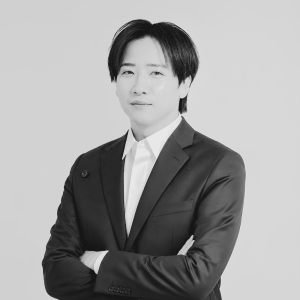
Noam Shazeer
Noam Shazeer
Noam Shazeer
Company Google / Character.AI
Country United States
Born November 20, 1976 (age 49)
Philadelphia, Pennsylvania
Education Duke University
Notable work Transformer Architecture ("Attention Is All You Need"), Character.AI, LaMDA
Title Co-founder of Character.AI & Google VP

Share this AI Inventor Biography

Spread historical AI biographies and inspire future innovators.

Share Post
Next Biography → Ashish Vaswani

Related AI Inventors

Kuaishou Technology — Kling Team / Visual Generation and Interaction Center

Pengfei Wan

Pengfei Wan is the publicly identified technical leader of Kuaishou's Kling models team, the organization behind Kling AI. He previously headed Kuaishou's Visual Generation and Interaction Center and has a research background in computer vision, computer graphics and multimodal machine learning.

Synthesia

Victor Riparbelli

Victor Riparbelli is the Danish entrepreneur and co-founder and CEO of Synthesia, an enterprise AI video company that uses generative AI and digital avatars to transform how organizations create training, communications and other business videos.

CinLink

Sergiu

Sergiu is the person publicly credited as the maker of CinLink, an early-stage AI media workspace that uses natural-language instructions to create, edit, search, translate, dub, summarize and repurpose media. His full identity and personal biography have not yet been reliably established in public sources.